Die Cutting Blade Maintenance Guide: How to Extend Tool Life and Maintain Cutting Quality
A die cutting tool rarely fails without warning. In many cases, the first signs appear in production: label edges become less clean, certain areas are not completely cut, matrix stripping becomes less stable, or operators gradually increase cutting pressure to maintain the same result. If these changes are ignored, tool wear can accelerate and eventually affect both product quality and production efficiency.
Proper die cutting blade maintenance is therefore not simply about cleaning the tool after production. Correct cutting pressure, material selection, machine condition, handling, storage, and routine inspection all influence die life. Whether using a rotary die, flexible die, or flatbed cutting die, a few good maintenance practices can significantly improve cutting consistency and reduce unnecessary tooling costs.
Why Die Cutting Tools Wear Faster Than Expected
Tool wear is a normal part of die cutting, but unusually short die life often indicates a process problem. Excessive cutting pressure is one of the most common causes. When operators increase pressure to compensate for poor cutting, the cutting edge is subjected to greater stress and may wear much faster than necessary.
Material also matters. Paper, films, adhesives, laminates, abrasive coatings, and release liners place different demands on the cutting tool. Adhesive residue and paper dust can accumulate around the cutting area, while some materials are naturally more difficult to process.
Machine condition should not be overlooked either. Uneven pressure, worn bearings, cylinder runout, or poor alignment can concentrate the cutting load in one area of the tool. If one section of a rotary die repeatedly wears faster than the rest, checking the machine and pressure distribution may be more useful than simply replacing the die.
Keep the Cutting Surface Clean
Adhesive, paper dust, ink residue, and small material particles can accumulate on a cutting die during production. This contamination may interfere with cutting and matrix stripping, particularly when processing pressure-sensitive label materials.
Clean the die regularly using methods suitable for the tool material and coating. Avoid using hard metal objects to scrape the cutting edge because even small scratches or dents can affect cutting quality. After cleaning, inspect the cutting surface carefully rather than immediately increasing pressure when a cutting problem appears.
The surrounding machine area should also remain clean. Anvil cylinders, magnetic cylinders, pressure surfaces, and material-contact rollers can all influence cutting performance if contaminated.
Use Only the Pressure the Job Requires
More pressure does not automatically mean better die cutting. A correctly selected and properly installed tool should cut the face material consistently without unnecessary force.
This is particularly important in pressure-sensitive label production, where the objective is often to kiss cut the label material while leaving the release liner intact. Excessive pressure may damage the liner, shorten die life, and create downstream problems during matrix stripping or label dispensing.
If a job suddenly requires significantly more pressure than before, investigate the cause first. A dirty or worn die, material change, incorrect die height, uneven pressure, or mechanical issue may be responsible. Continuously adding pressure can hide the original problem while accelerating tool wear.
Pay Attention to the Material, Not Just the Machine
A die that performs well on one material may behave differently on another. Material thickness, adhesive characteristics, liner properties, coating, hardness, and construction all affect the cutting process.
When changing to a new labelstock or other substrate, avoid assuming that the previous pressure setting will remain correct. Start conservatively, inspect the cut, and make small adjustments. If possible, keep records of successful tool and pressure combinations for frequently processed materials.
For demanding applications, providing material samples to the die or machine supplier before production can help determine whether the existing tooling is suitable.
Watch the Cut Quality for Early Signs of Wear
Tool condition is often easier to judge from the finished product than from visual inspection alone. If labels begin to show incomplete cutting, burrs, rough edges, inconsistent release, or difficult matrix stripping, the cutting tool should be one of the first areas inspected.
The pattern of the defect can provide additional information. A problem appearing only in one position may indicate localized tool damage or uneven pressure. A defect repeating at a regular interval can point toward a specific area of a rotary component. If cutting quality deteriorates across the entire web, general tool wear, pressure, material, or machine setup may be involved.
This type of observation is more useful than immediately adjusting multiple machine parameters at the same time.
Handle Rotary and Flexible Dies Carefully
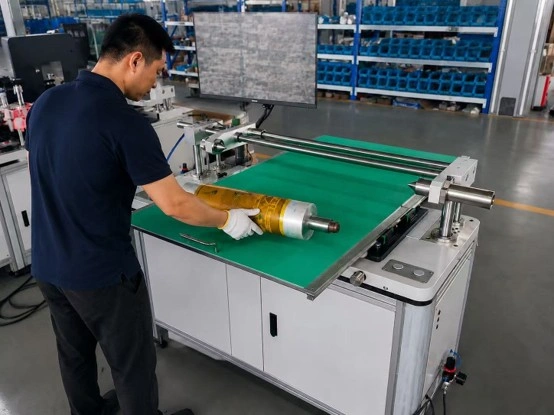
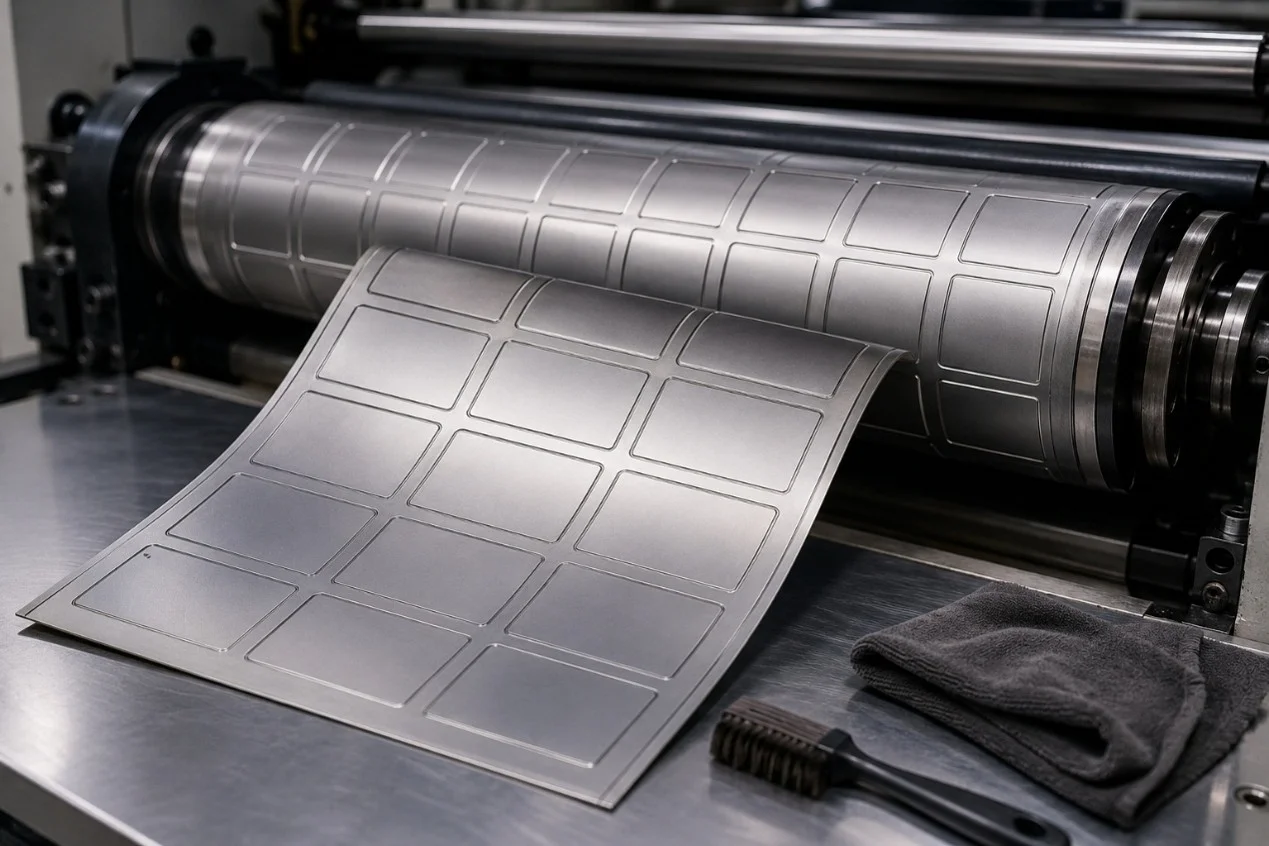
Precision rotary dies and flexible dies can be damaged during handling even before they return to production. Cutting edges should not be placed directly against hard surfaces, and tools should be protected from impacts during installation, removal, transportation, and storage.
Flexible dies require particular care because bending, scratching, or improper handling can affect their performance. Magnetic cylinder surfaces should also be kept clean so that the flexible die can sit correctly and securely.
When removing a die from the machine, clean and inspect it before storage. This makes it easier to identify damage immediately instead of discovering the problem during the next production run.
Store Cutting Tools in the Right Conditions
Good storage is part of maintenance. Tools should be kept clean, dry, protected from impact, and clearly identified for future jobs. Moisture and unsuitable storage conditions may lead to corrosion on unprotected metal surfaces, while poor organization increases the risk of accidental damage.
For repeat label jobs, clear tool identification can also reduce setup errors. Recording the job name, material, cutting specifications, and previous production performance helps operators select the correct die and begin with proven settings.
Don’t Ignore the Anvil and Machine Condition
The cutting die is only one part of the cutting system. In rotary die cutting, the condition of the anvil cylinder, magnetic cylinder, bearings, gears, and pressure adjustment system can directly influence tool performance.
For example, if cutting is consistently deeper on one side of the web, replacing the die may not solve the problem if the real cause is uneven pressure or mechanical alignment. Similarly, cylinder runout or worn bearings can create periodic variation in cutting depth.
When die life becomes unusually short, inspect the complete cutting system rather than treating the cutting tool as an isolated component.
When Should a Die Cutting Tool Be Repaired or Replaced?
There is no single service-life figure that applies to every die. Tool life depends on the type of die, substrate, adhesive, production volume, cutting pressure, machine condition, operating speed, and maintenance practices.
A tool should be evaluated when normal cleaning and correct pressure adjustment can no longer restore consistent cutting quality. Depending on the tool design and condition, repair, re-sharpening, or replacement may be possible. Continuing to operate a severely worn tool by applying excessive pressure is rarely a good long-term solution because it can increase waste and place unnecessary load on other machine components.
Maintenance Is Part of Cutting Quality Control
The most effective maintenance program connects tool condition with actual production results. Instead of waiting for a die to fail, operators can record cutting pressure, material, production quantity, cleaning history, and any changes in cutting quality. Over time, these records make it easier to understand why certain tools last longer and which jobs create more wear.
Consistent die maintenance also supports more predictable production. Clean and correctly maintained tooling requires fewer adjustments, produces more stable cutting depth, reduces unexpected downtime, and helps control material waste.
Final Thoughts
Long die life is not achieved by maintenance alone. It comes from using the correct tool for the material, applying appropriate cutting pressure, keeping the cutting system clean, handling dies carefully, and maintaining the machine itself in good mechanical condition.
When cutting quality begins to change, the best response is to identify the reason rather than simply increasing pressure. This approach protects the cutting tool while helping label and packaging converters maintain cleaner edges, more consistent cutting depth, reliable matrix stripping, and better overall production efficiency.