Slitting Machine Tension Problems: Causes and Practical Solutions
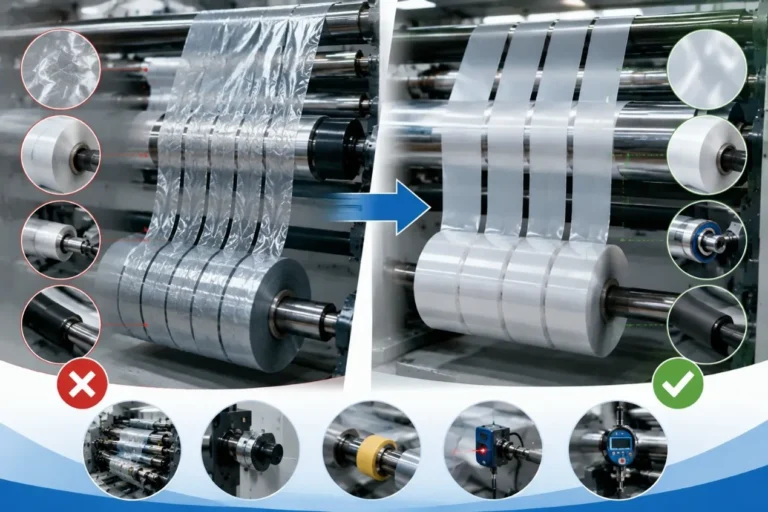
Stable web tension is essential for achieving accurate slitting and consistent rewinding quality. When tension becomes too high, too low, or unstable during production, problems such as film wrinkles, roll telescoping, web wandering, uneven roll hardness, poor slit edges, and even web breaks can occur. These issues not only affect finished roll quality but also increase material waste and reduce production efficiency.
Slitting machine tension problems are often related to more than one factor. Material properties, unwind control, machine speed, roller condition, web guiding, and rewind settings all influence how the web behaves. Understanding where tension changes occur is therefore the first step toward solving the problem.
Why Is Tension Control Important in Slitting?
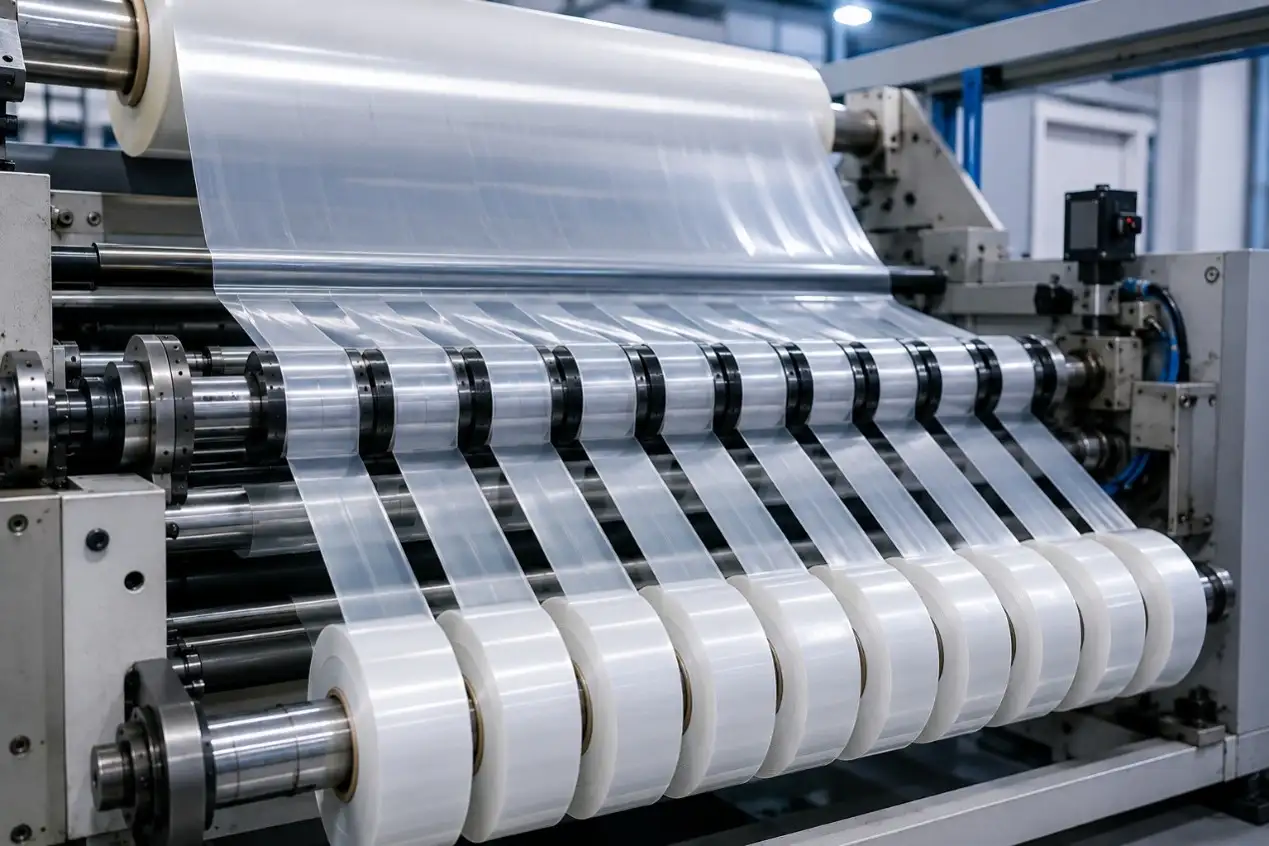
During slitting, the master roll is unwound, guided through the slitting section, separated into narrower webs, and finally rewound into finished rolls. The material must remain stable throughout this process.
If web tension changes significantly between these sections, the material may stretch, wrinkle, shift sideways, or rewind unevenly. Thin films such as PET, BOPP, PE, and CPP are particularly sensitive to tension variation, while self-adhesive label materials and laminated structures may require different settings because of their thickness and stiffness.
A well-designed slitter rewinder therefore needs coordinated tension control from unwind to rewind rather than relying on a single tension setting.
1. Web Tension Is Too High
Excessive tension can stretch or deform the material during slitting. Thin plastic films are especially vulnerable, and excessive tension may also increase the risk of web breaks at higher production speeds.
Typical signs include stretched film, curling, overly hard finished rolls, deformation around the core, or frequent web breaks. The solution is to reduce tension gradually while monitoring web stability and finished roll quality. Tension settings should always be matched to the material rather than using the same value for every job.
2. Web Tension Is Too Low
Low tension allows the web to become unstable between rollers. The material may wrinkle, wander sideways, or enter the slitting knives at an inconsistent angle, affecting both slit accuracy and rewinding quality.
If wrinkles or web movement appear during production, inspect the unwind tension and the tension between the main machine sections. Increasing tension slightly may improve stability, but excessive adjustment can simply replace one problem with another.
3. Unstable Unwind Tension
The diameter of the master roll continuously decreases during production. If the unwind system does not compensate correctly, web tension may change from the beginning to the end of the roll.
This can result in registration-like web movement, wrinkles, inconsistent slit width, and unstable rewinding. Automatic tension control using load cells, dancer systems, servo drives, or properly controlled brakes can help maintain more consistent tension as the unwind diameter changes.
4. Incorrect Rewinding Tension
Rewind tension has a direct influence on finished roll hardness and appearance. Excessive tension can produce rolls that are too hard or create internal stress, while insufficient tension can result in loose rolls, telescoping, or layer movement.
The correct rewind tension depends on the material, roll diameter, slit width, and production speed. For many applications, taper tension is used so that winding tension gradually decreases as the finished roll diameter increases. This helps create a more uniform roll structure from the core to the outer layers.
5. Poor Taper Tension Settings
Using constant tension throughout the entire rewinding process may not produce good results, particularly when winding larger rolls. As roll diameter increases, excessive outer-layer pressure can create hard rolls, wrinkles, or internal deformation.
Proper taper tension reduces the winding force progressively as the roll grows. The correct taper percentage should be determined through material testing because thin films, paper, laminates, and self-adhesive materials behave differently during winding.
6. Tension Changes During Acceleration and Deceleration
A slitting machine may operate normally at a constant speed but develop wrinkles or loose winding during acceleration and deceleration. This often indicates that the tension control system is not responding quickly enough to speed changes.
Servo-driven tension systems and properly tuned closed-loop control can improve dynamic response. Operators should also avoid unnecessarily aggressive acceleration when processing thin or sensitive materials.
7. Roller Alignment and Mechanical Problems
Not every apparent tension problem is caused by the tension controller itself. Misaligned rollers, damaged bearings, contaminated roller surfaces, or uneven nip pressure can create different tension levels across the web.
For example, if one side of the material consistently wrinkles while the other side remains flat, roller alignment and cross-web tension should be inspected before making major changes to the tension settings.
8. Material Thickness and Quality Variation
Variation in material thickness can cause uneven tension across the web and become more obvious after the master roll is divided into multiple narrow rolls. Laminated materials and adhesive products may also behave differently depending on coating uniformity and material construction.
If tension problems occur only with a specific material batch, compare it with a previously successful roll before changing the machine configuration. This helps determine whether the root cause is the equipment or the substrate.
9. Rewinding Multiple Rolls with Different Tension
When several narrow rolls are rewound on the same shaft, small differences in material thickness or roll diameter can cause some rolls to become tighter than others. This may lead to uneven roll hardness, loose edges, or telescoping.
For applications where multiple slit rolls must be rewound simultaneously with high consistency, differential rewinding can help compensate for small differences between individual rolls and improve finished roll quality.
10. Running the Machine Too Fast
Higher slitting speed increases productivity, but it also makes tension fluctuations more difficult to control. If wrinkles, web wandering, or winding defects appear only at high speed, the tension system, web path, roller condition, and acceleration settings should be checked.
The best production speed is not simply the maximum mechanical speed of the slitter. It is the highest speed at which stable tension, accurate slitting, and consistent rewinding quality can be maintained.
How to Troubleshoot Slitting Machine Tension Problems
When a tension problem appears, first identify where the defect begins. Check whether the web is already unstable at the unwind section, whether wrinkles appear before or after the slitting knives, and whether the problem develops only during rewinding. Then inspect tension settings, load cells or dancer systems, roller alignment, web guiding, rewind torque, taper tension, and material condition.
Changing several parameters at the same time makes troubleshooting more difficult. Adjust one factor at a time and record the result so that the actual cause can be identified more accurately.
How to Improve Tension Stability
Consistent slitting performance requires both suitable equipment and standardized operating procedures. Tension sensors should be calibrated regularly, rollers should remain clean and aligned, and successful tension settings should be recorded according to material type, thickness, width, speed, and finished roll diameter.
Modern servo-driven slitter rewinders with closed-loop tension control, automatic web guiding, taper tension management, and suitable rewinding systems can provide better stability when processing demanding materials. However, correct machine setup and material-specific parameters remain essential even with advanced automation.
Conclusion
Slitting machine tension problems can cause wrinkles, web wandering, uneven roll hardness, telescoping, loose winding, material stretching, and web breaks. The most common causes include incorrect unwind or rewind tension, poor taper settings, unstable acceleration, roller misalignment, material variation, and unsuitable production speed. By identifying where tension instability begins and adjusting the process systematically, manufacturers can improve finished roll quality while reducing material waste and unnecessary downtime. Precise tension control combined with proper web guiding, reliable rewinding, and regular machine maintenance is one of the most important foundations for stable, high-quality slitting production.