
Flatbed vs Rotary Die Cutting: Which Die Cutting Method Is Better?
Die cutting is an essential converting process in label, packaging, adhesive material, and printing production. Among the different technologies available, flatbed and rotary die cutting are two of the most common methods. Both can produce accurate shapes and finished products, but they operate differently and are better suited to different materials, production volumes, speeds, and investment requirements.
For manufacturers choosing a die cutting machine, the question is therefore not simply whether flatbed or rotary die cutting is better. The more important question is which technology is better for your specific application. This guide compares the working principles, advantages, limitations, and typical applications of both methods to help you make a practical decision.
What Is Flatbed Die Cutting?
Flatbed die cutting uses a flat cutting die and a flat pressure surface. The material is positioned between them, and vertical pressure pushes the die through or partially through the substrate according to the required shape.
This method can generate strong cutting pressure and is suitable for a wide range of materials, including paper, cardboard, adhesive products, foam, rubber, and other relatively thick materials. Because flatbed tooling is generally simpler and less expensive than precision rotary tooling, it can also be attractive for short runs, frequent job changes, and applications with many different cutting designs.
The main limitation is production speed. Because the cutting action is intermittent rather than continuously rotating, flatbed die cutting is generally slower than full rotary die cutting.
What Is Rotary Die Cutting?
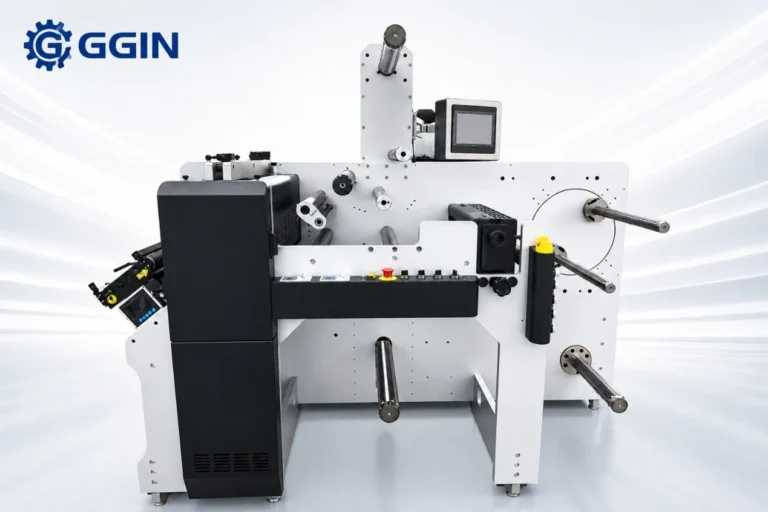
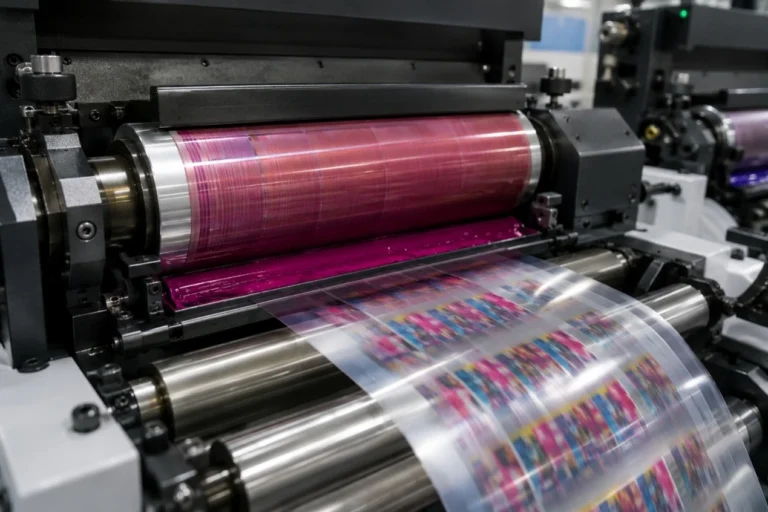
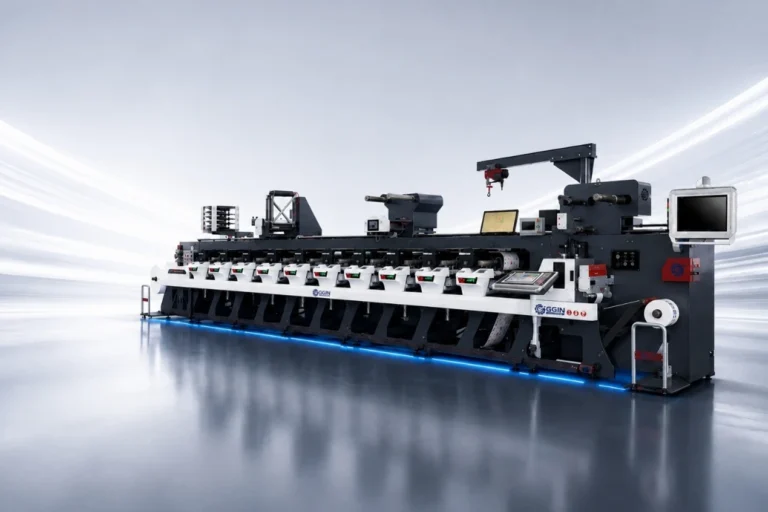
Rotary die cutting uses cylindrical tooling that rotates continuously as the web passes between the die and anvil cylinders. The cutting pattern is repeated with every revolution, making the process highly suitable for continuous roll-to-roll production.
In label manufacturing, rotary die cutting is widely used for self-adhesive labels, paper labels, films, tapes, and other roll materials. It provides high production speed, excellent repeatability, and efficient integration with printing, slitting, matrix stripping, and rewinding processes.
The main consideration is tooling cost. Rotary dies or magnetic cylinders with flexible dies can require a higher initial investment, so production volume and job frequency should be considered when evaluating total cost.
Flatbed vs Rotary Die Cutting: Main Differences
The biggest difference between the two technologies is how the cutting pressure is applied. Flatbed machines use a vertical pressing action, while rotary machines perform continuous cutting through rotating cylinders. This difference affects production speed, tooling, material compatibility, and the type of jobs each machine handles most efficiently.
| Factor | Flatbed Die Cutting | Rotary Die Cutting |
| Cutting Method | Intermittent vertical pressure | Continuous rotary cutting |
| Production Speed | Low to medium | Medium to high |
| Tooling Cost | Generally lower | Generally higher |
| Short Runs | Very suitable | Depends on tooling and setup |
| Long Runs | Less efficient | Highly efficient |
| Thick Materials | Very suitable | Depends on configuration |
| Roll-to-Roll Labels | Possible, depending on machine | Excellent |
| Repeatability | Good | Excellent |
| Inline Production | More limited | Excellent |
| Typical Application | Short runs and varied materials | High-volume label production |
Neither technology is automatically better in every category. The correct choice depends on what you need to produce.
Production Speed and Volume
If production speed is the priority, rotary die cutting usually has the advantage. Continuous rotation allows material to pass through the cutting section at high speed without stopping for each cutting cycle. This makes rotary systems particularly suitable for medium- and high-volume label production.
Flatbed die cutting is slower because of its reciprocating cutting action, but maximum speed is not always the most important consideration. For shorter orders with frequent design changes, lower tooling costs and greater flexibility may make flatbed production more economical.
Tooling Cost and Job Changes
Tooling is an important part of the purchasing decision. Flatbed dies are generally more economical to manufacture, which can reduce the cost of introducing new designs and make short production runs more practical.
Rotary tooling usually represents a larger investment, although flexible dies used with magnetic cylinders have improved flexibility for modern label converters. When the same product is manufactured repeatedly or in large quantities, the higher productivity of rotary die cutting can offset the initial tooling cost.
Manufacturers should therefore consider tooling cost together with expected order quantity, job frequency, changeover requirements, and machine productivity rather than comparing die prices alone.
Cutting Accuracy and Quality
Both technologies can provide accurate cutting when the machine, tooling, and process are correctly configured. Rotary die cutting offers excellent repeatability during continuous high-speed production, making it particularly suitable for labels requiring consistent dimensions over long runs.
Flatbed systems provide strong and controlled cutting pressure and can perform well on thicker or more demanding materials. In both cases, worn tooling, incorrect pressure, unstable web tension, or poor material quality can lead to incomplete cutting, burrs, liner damage, or excessive waste.
Material Compatibility
Flatbed die cutting is highly versatile and can handle many paper, cardboard, foam, adhesive, and thicker converting materials. Rotary die cutting is especially effective for continuous roll materials such as self-adhesive labelstock, coated paper, films, tapes, and thin flexible materials.
For label converters, the material should always be tested together with the required cutting depth. Kiss cutting a pressure-sensitive label without damaging the release liner, for example, requires more precise pressure and tooling control than simply cutting completely through a sheet.
Which Is Better for Label Production?
For high-volume roll-to-roll label manufacturing, rotary die cutting is usually the more efficient solution. It can operate at higher speeds and can be integrated with printing, matrix stripping, slitting, inspection, and rewinding equipment to create an efficient production line.
Flatbed die cutting can be a better option for shorter jobs, specialized shapes, lower tooling budgets, or applications involving thicker materials. It may also be attractive to converters that process a wide variety of products rather than producing large quantities of the same label.
There is also another option for label manufacturers: intermittent or semi-rotary die cutting. This technology can reduce the need for different cylinder sizes for different repeat lengths and provides greater flexibility for short and medium label runs. The choice between flatbed, full rotary, and intermittent rotary systems should therefore be based on the converter’s actual job structure.
How to Choose the Right Die Cutting Method
Before purchasing a machine, consider the materials you process, maximum web width, minimum and maximum label size, production volume, required speed, cutting accuracy, order length, tooling budget, and frequency of job changes. You should also determine whether the die cutter will operate independently or inline with printing, slitting, matrix stripping, and rewinding equipment.
Whenever possible, provide the machine supplier with actual material samples and finished product requirements for testing. A successful cutting test is usually more valuable than choosing a machine based only on maximum speed or other specification-sheet numbers.
Conclusion
Flatbed and rotary die cutting both have important advantages. Flatbed die cutting offers flexible material handling, strong cutting pressure, and generally lower tooling costs, making it suitable for short runs and varied applications. Rotary die cutting provides higher production speed, excellent repeatability, and efficient roll-to-roll integration, making it particularly attractive for medium- and high-volume label production.
The best die cutting method is therefore the one that matches your materials, order structure, production volume, tooling requirements, and future production plans. Evaluating the complete production process rather than focusing on a single specification will help you choose a machine that delivers better long-term efficiency and value.