
BOPP Film Printing: A Practical Guide to Better Flexo Print Quality
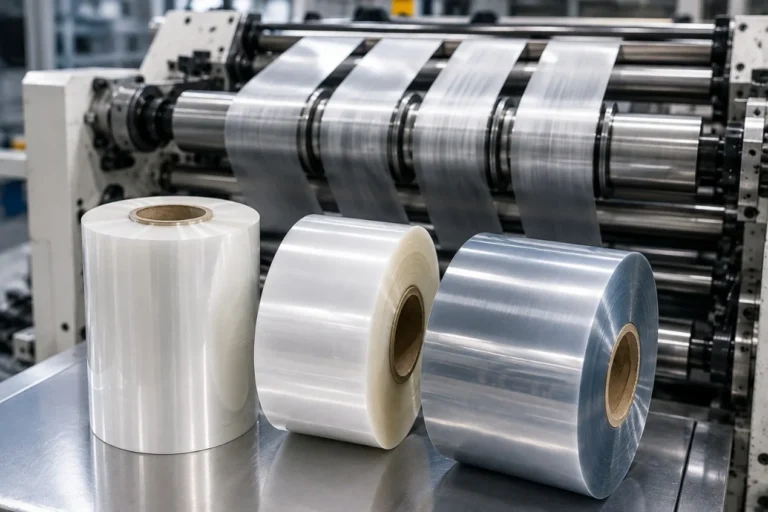
BOPP (Biaxially Oriented Polypropylene) film is widely used in flexible packaging, labels, and other printed packaging applications because of its clarity, strength, moisture resistance, and attractive appearance. However, printing on BOPP film requires more careful process control than printing on many paper substrates.
Poor ink adhesion, unstable color, registration errors, film wrinkles, and drying problems can affect production quality. For flexographic printers, understanding the characteristics of BOPP film and selecting the correct ink, printing conditions, and machine configuration are essential for achieving consistent results.
Why Is BOPP Film Challenging to Print?
BOPP film has a relatively low surface energy in its untreated state, which makes it difficult for many printing inks to wet and adhere to the surface. Without suitable surface treatment or a compatible coating, the printed ink may show poor adhesion, uneven coverage, or resistance problems during downstream processing.
Most BOPP films intended for printing are supplied with a treated or coated surface. Corona treatment is commonly used to increase surface energy and improve ink wettability. However, treatment effectiveness can decline during storage, and the required surface energy depends on the ink system and film grade.
Before printing, operators should confirm which side of the film is printable and whether its surface treatment is suitable for the selected ink. A film that looks clean and smooth may still have insufficient surface energy for reliable printing.
Choosing the Right Ink for BOPP Film
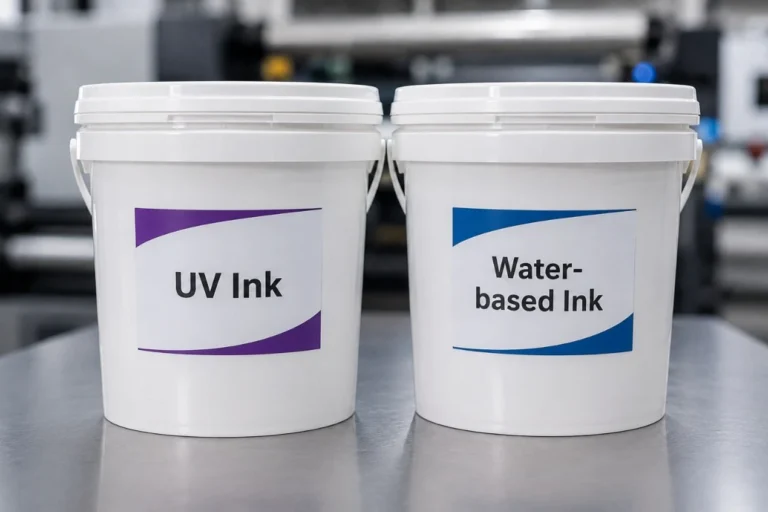
Ink selection is one of the most important decisions in BOPP flexographic printing. Solvent-based, water-based, and UV-curable inks can all be used in suitable applications, but they have different requirements.
Solvent-based flexo inks are widely used in flexible packaging film printing because compatible formulations can provide good adhesion and printing performance on treated films. The printing press must have sufficient drying and exhaust capacity, along with appropriate solvent-handling and safety provisions.
Water-based flexo inks can also be used on selected BOPP films, but adhesion and drying may require specially formulated inks, suitable surface treatment, and an effective hot-air drying system. Because BOPP is non-absorbent, moisture must be removed from the printed ink film rather than absorbed into the substrate.
UV flexo inks are commonly used for filmic labels and certain packaging applications. They offer rapid curing when the ink chemistry, substrate, and UV system are compatible. However, curing performance, adhesion, heat sensitivity, and end-use requirements must be carefully evaluated.
The best ink system depends on the finished product, printing method, film construction, and downstream processing. For laminated or food-related packaging, ink selection should also account for the intended structure and applicable regulatory requirements.
Web Tension and Registration Stability
BOPP film is dimensionally more stable than some other flexible films, but excessive tension, uneven web handling, and temperature changes can still affect printing accuracy.
In multi-color flexographic printing, even small changes in web length or lateral position can create registration errors. These problems may become more noticeable during acceleration, deceleration, or high-speed operation.
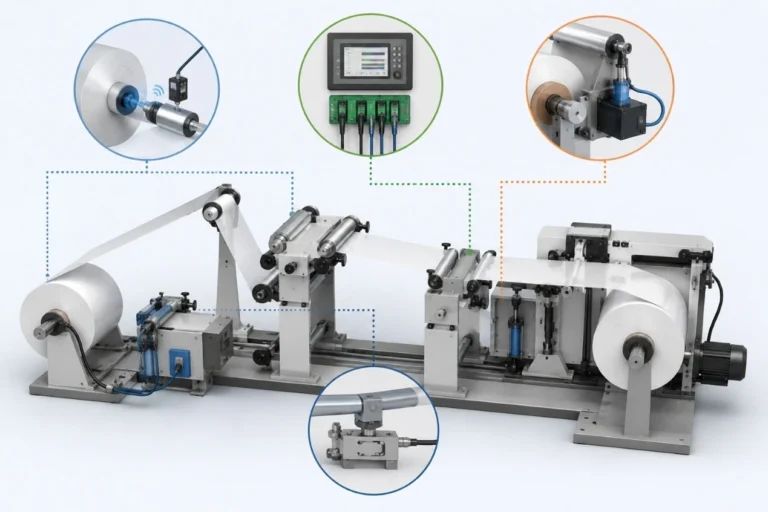
Stable unwind tension, accurate web guiding, and coordinated printing unit control help maintain consistent material movement through the press. Servo-driven flexographic printing machines can support precise motion control and registration adjustment, but correct tension settings and suitable mechanical conditions remain essential.
Operators should avoid using excessive tension simply to keep the film flat. The correct setting must balance web stability with the risk of stretching, wrinkles, and other material deformation.
Drying and Temperature Control Matter
Drying performance has a direct influence on BOPP printing quality. Unlike absorbent paper, BOPP film does not allow liquid ink carriers to penetrate into the substrate, so the drying or curing system must be matched to the ink film and production speed.
With solvent-based or water-based inks, insufficient drying may lead to ink smearing, blocking, or transfer of ink between layers during rewinding. Excessive heat, on the other hand, can cause film distortion, shrinkage, or unstable web tension.
UV printing presents a different challenge. The curing system must deliver sufficient energy without creating unacceptable heat-related effects on the film. Lamp condition, ink film thickness, curing technology, and press speed all influence the result.
The objective is not to use the highest possible dryer temperature or UV output, but to achieve reliable drying or curing while protecting the substrate.
How Anilox Selection Affects BOPP Print Quality
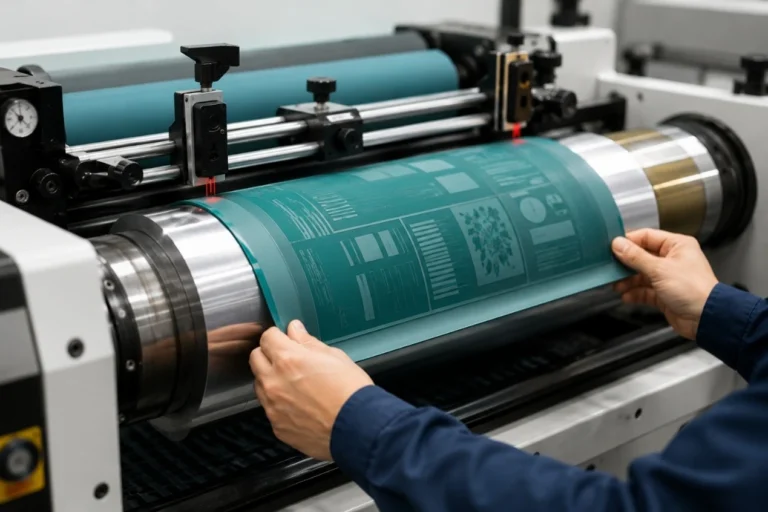
The anilox roller controls the amount of ink transferred to the printing plate and is therefore critical for consistent color and image reproduction.
Fine text, barcodes, and detailed graphics generally require carefully controlled ink transfer, while heavy solid areas or opaque white printing may need a different ink film volume. The appropriate anilox line screen and cell volume depend on the ink, printing plate, artwork, and required coverage.
An incorrect anilox specification can contribute to weak solids, excessive dot gain, dirty print, or drying difficulties. Contaminated anilox cells and worn doctor blades may also cause uneven ink transfer and color variation.
Regular cleaning, proper blade adjustment, and consistent ink conditions help maintain stable printing performance throughout production.
Common BOPP Printing Problems and What They Indicate
When printing problems occur, the pattern of the defect often provides useful clues.
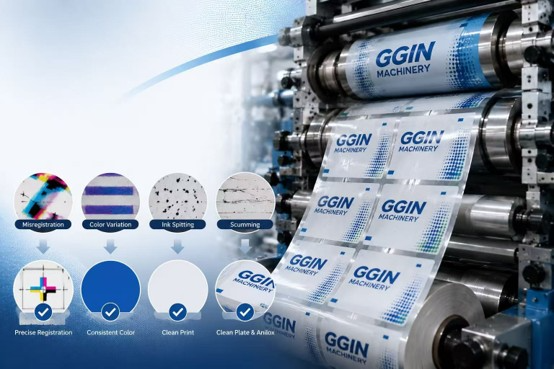
If ink adhesion is poor across the entire printed surface, check the film treatment level, printable side, ink compatibility, and drying or curing conditions. If adhesion problems occur only in certain areas, surface contamination or inconsistent treatment may also be involved.
Registration errors that increase with machine speed may indicate unstable web tension, roller slip, registration control problems, or temperature-related material movement.
Wrinkles can result from incorrect tension, roller alignment, uneven incoming rolls, or excessive heat. Meanwhile, inconsistent color density may be related to ink condition, anilox cleanliness, doctor blade performance, or changes in printing pressure.
Static electricity is another concern when processing BOPP film. Accumulated charge can attract dust, interfere with web handling, and create problems during rewinding. Proper grounding of conductive machine components and suitable static-control equipment can help reduce these effects.
The most effective troubleshooting approach is to identify when and where the defect develops rather than changing several machine settings at the same time.
Rewinding Quality Is Part of Print Quality
Good printing results can still be damaged during rewinding if the ink has not dried or cured sufficiently or if winding tension is incorrect.
Excessive rewind tension may produce overly tight rolls, while insufficient tension can cause loose winding or unstable roll edges. Blocking, surface marking, telescoping, and other roll defects may appear after printing even when the web looked acceptable during the press run.
For BOPP labels and packaging films, appropriate rewind tension, taper settings where applicable, static control, and sufficient drying or curing are important for maintaining the finished material’s quality.
Choosing a Flexo Printing Machine for BOPP Film
When purchasing a flexographic printing machine for BOPP film, the most important consideration is whether the equipment is suitable for the actual material and finished product.
Buyers should confirm the printing width, film thickness range, number of colors, ink system, required production speed, drying or curing capacity, and registration requirements. The machine’s tension-control system and ability to handle thin or heat-sensitive materials also deserve careful evaluation.
Servo modular flexo presses can be suitable for narrow-web filmic labels and applications requiring flexible inline converting. Stack flexo presses may also be used for selected BOPP film printing applications, depending on the machine design and required printing performance.
Whenever possible, request a printing test using representative BOPP material. Adhesion, color consistency, registration, drying or curing, and finished roll quality should be evaluated under realistic production conditions rather than relying only on maximum machine speed.
Building a Reliable BOPP Printing Process
Consistent BOPP film printing depends on matching the substrate, ink, anilox roller, printing plate, web tension, and drying or curing system. Surface treatment should be verified before production, and machine settings should be recorded for repeat jobs.
Instead of focusing on one individual adjustment, printers should evaluate the complete process from unwinding to finished roll inspection. This helps reduce startup waste, improve color and registration consistency, and maintain reliable production quality.
Looking for a flexographic printing machine for BOPP film or other flexible packaging materials? GGIN Machinery provides servo modular and stack flexo printing solutions with different ink, drying, and web-handling configurations. Share your film type, thickness, printing width, number of colors, ink requirements, and production speed, and we can help you evaluate a suitable printing solution.