Solvent-Based vs UV Ink in Flexo Printing: Key Differences and How to Choose
Choosing between solvent-based and UV ink is an important decision in flexographic printing because the ink system affects much more than color. It influences drying or curing requirements, press configuration, production conditions, substrate compatibility, energy use, ventilation, maintenance, and the characteristics of the finished product.
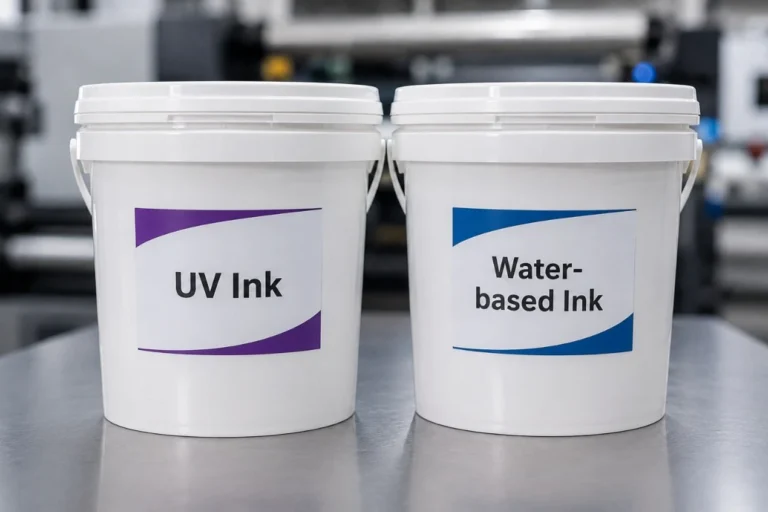
Both technologies are widely used in flexographic printing, but they serve different production needs. Solvent-based inks remain important in flexible packaging and film printing, while UV flexo is widely used in narrow-web label and packaging applications where fast curing and high print quality are required. Understanding how the two systems behave in actual production is more useful than simply asking which ink is better.
The Fundamental Difference Is How the Ink Dries
Solvent-based flexographic ink contains volatile solvents that carry the resin, pigment, and other components needed for printing. After the ink is transferred to the substrate, these solvents must evaporate so that the printed ink film can dry. A flexo press using solvent-based ink therefore requires an effective hot-air drying and exhaust system.
UV ink works differently. Instead of relying primarily on evaporation, UV-curable ink contains components that react when exposed to suitable ultraviolet energy. The printed ink is passed through a UV curing unit, where this reaction converts the liquid ink film into a cured layer.
This difference in drying mechanism influences almost every other part of the printing process.
Where Solvent-Based Flexo Ink Is Commonly Used
Solvent-based inks are particularly important when printing flexible packaging films such as BOPP, PET, PE, and other non-absorbent substrates. With the correct ink formulation and surface treatment, they can provide strong adhesion, good printability, and the performance required for many packaging applications.
For wider-web flexible packaging production, solvent-based flexo remains a common solution. The ink’s ability to work with different film structures is one reason it continues to be used even as other ink technologies develop.
The challenge is that solvent evaporation must be carefully managed. Drying capacity, airflow, exhaust, press speed, ink viscosity, temperature, and solvent handling all affect production stability. Appropriate ventilation, fire-safety measures, and compliance with applicable environmental and workplace requirements are also important when operating a solvent-based printing process.
Why UV Ink Is Popular in Label Printing
UV flexo is widely used in narrow-web label production because the ink cures rapidly under suitable UV energy. Once properly cured, the printed surface can move quickly into downstream processes such as die cutting, slitting, laminating, or rewinding.
UV inks are well suited to many self-adhesive label applications and can provide strong color, fine detail, and consistent reproduction. They are used on a range of paper and filmic label materials, although ink selection, substrate surface properties, and curing conditions still need to be matched correctly.
Because UV inks do not depend on conventional solvent evaporation in the same way as solvent-based inks, the press configuration is different. UV curing units, cooling where required, suitable ink delivery components, and appropriate safety measures become important parts of the system.
Print Quality and Color: Is UV Always Better?
UV flexo is often associated with high-quality label printing, but it would be misleading to say that UV ink automatically produces better print quality than solvent-based ink. Both systems can achieve excellent results when the ink, anilox roller, printing plate, substrate, pressure, and press settings are correctly matched.
UV inks can provide strong color density and controlled reproduction, making them attractive for detailed labels and graphics. Solvent-based inks can also deliver excellent graphics and consistent color, particularly in flexible packaging applications where the ink system has been optimized for the film and press.
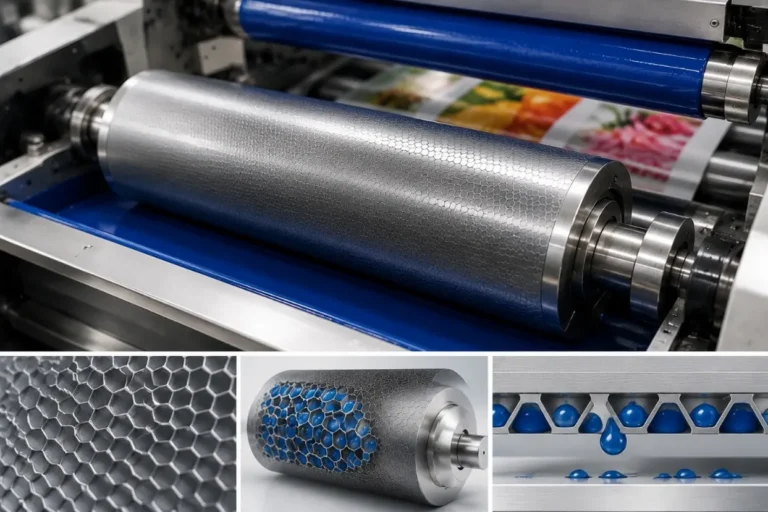
Anilox selection is especially important for both technologies. Cell volume and line screen influence the ink film delivered to the plate, while the doctor blade must meter the anilox consistently. Changing from one ink system to another without considering these components can create color, drying, and print-quality problems.
Production Speed Depends on More Than the Ink
It is tempting to compare ink systems simply by asking which one prints faster, but practical press speed is determined by the complete production process.
With solvent-based ink, drying capacity can become a limiting factor. At higher speeds, the dryer must remove sufficient solvent before the web reaches the next printing unit, downstream process, or rewind. Heavy ink coverage can increase this challenge.
UV ink cures quickly, but production speed still depends on the available UV output, ink film thickness, substrate, lamp condition, cooling, and required curing level. If curing energy is insufficient for the selected speed and ink coverage, simply running the press faster can result in inadequate cure.
The correct comparison is therefore not the theoretical speed of the ink, but whether the complete press is designed to dry or cure the required ink film at the intended production speed.
Ink Behavior During a Long Production Run
Solvent-based ink requires attention to viscosity because solvent evaporation can gradually change ink properties during production. Operators may need to monitor and control viscosity to maintain stable ink transfer and color density. Temperature and ink circulation can also influence the result.
UV inks do not experience solvent evaporation in the same way, which can simplify some aspects of viscosity management. However, temperature, contamination, ink circulation, curing conditions, and ink condition still require control.
In either system, stable color comes from controlling the complete ink transfer process rather than relying on the ink type alone.
Equipment Requirements Are Different
A flexographic press intended for solvent-based printing needs a drying system with sufficient airflow and exhaust capacity for the intended ink coverage and speed. Depending on the installation and applicable regulations, the production environment may also require additional ventilation and safety provisions for handling flammable solvents and vapors.
A UV flexo press requires UV curing equipment. Traditional mercury UV systems have been widely used, while LED UV technology is also used in suitable applications. LED UV can offer benefits such as instant on/off operation and reduced heat compared with conventional UV lamps, but the ink chemistry must be compatible with the selected curing wavelength and system.
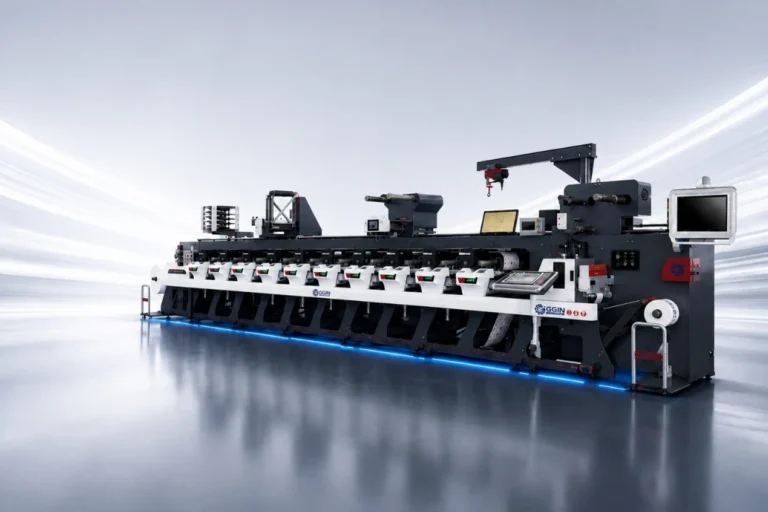
For a buyer selecting a new flexographic press, the ink system should therefore be confirmed early. It affects not only the drying or curing unit but also the overall machine specification and production environment.
VOCs, Energy and Environmental Considerations
Solvent-based printing releases volatile organic compounds as the solvent evaporates, so ventilation, solvent management, emissions control, and local regulatory requirements need to be considered. The actual environmental impact depends on the ink chemistry, production scale, recovery or treatment system, and local operating conditions.
UV inks contain little or no conventional volatile solvent compared with typical solvent-based systems, but this does not mean every UV printing process is automatically environmentally preferable. Energy consumption, lamp technology, ink chemistry, waste handling, de-inking or recycling considerations, and the final application all contribute to the overall picture.
For this reason, environmental comparisons should be based on the complete production system rather than a single characteristic of the ink.
So, Which Ink System Should You Choose?
The answer depends mainly on what you are printing.
| Factor | Solvent-Based Ink | UV Ink |
| Drying method | Solvent evaporation / hot air | UV curing |
| Common applications | Flexible packaging, films | Labels, narrow-web packaging |
| Typical substrates | PET, BOPP, PE and other films | Paper and filmic labelstock |
| Production consideration | Drying and exhaust capacity | UV curing capacity |
| VOC consideration | Higher due to solvent evaporation | Little/no conventional solvent |
| Ink viscosity control | Important during production | Different viscosity behavior; temperature still matters |
| Downstream converting | Requires adequate drying | Rapid curing supports inline converting |
| Factory requirements | Ventilation and solvent safety | UV equipment and curing safety |
For flexible packaging films and many wider-web applications, solvent-based flexo can be a practical choice because of its established performance across a wide range of film structures. The press, however, must have sufficient drying capacity and the production facility must be prepared for solvent handling and ventilation requirements.
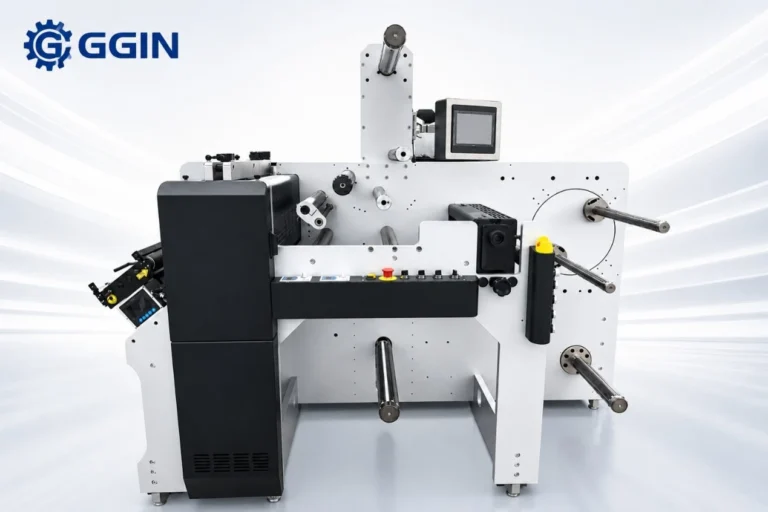
For narrow-web self-adhesive labels and other applications requiring rapid curing, strong graphics, and immediate downstream converting, UV flexo is often attractive. It is especially useful when printing and converting processes are integrated into one production line.
The decision should also consider substrate, required ink performance, web width, production speed, number of colors, available factory infrastructure, local regulations, downstream converting, and the requirements of the finished package or label.
For some printers, the question is not whether solvent or UV is universally better, but which ink system fits the products they intend to manufacture most often.
A Practical Approach Before Choosing a Flexo Press
If you are purchasing a new flexographic printing machine, define the application before deciding the drying or curing configuration. Prepare several representative substrates and identify the required colors, printing width, production speed, print coverage, downstream processes, and end-use requirements.
Testing actual materials is particularly valuable when printing films. Ink adhesion, surface treatment, curing or drying performance, and finished print properties should be confirmed under realistic production conditions.
A flexo press should ultimately be configured around the production application rather than choosing an ink technology first and trying to make every future job fit that system.
Final Thoughts
Solvent-based and UV inks are both proven technologies in flexographic printing, but their strengths appear in different applications. Solvent-based ink remains important for many flexible packaging and film-printing jobs, while UV flexo is widely used for narrow-web labels and integrated label converting.
The best choice depends on substrate, product requirements, drying or curing capacity, production speed, factory conditions, and downstream processing. Evaluating these factors together provides a much more reliable basis for selecting an ink system—and the flexographic press configuration that supports it.
Not sure whether solvent-based or UV flexo is the right choice for your production? GGIN Machinery provides flexographic printing solutions with different drying and curing configurations for label and flexible packaging applications. Send us your substrate, printing width, number of colors, ink type, required production speed, and finished product, and we can help you evaluate a suitable flexo press configuration.