Static Electricity in Film Slitting: Why It Happens and How to Control It
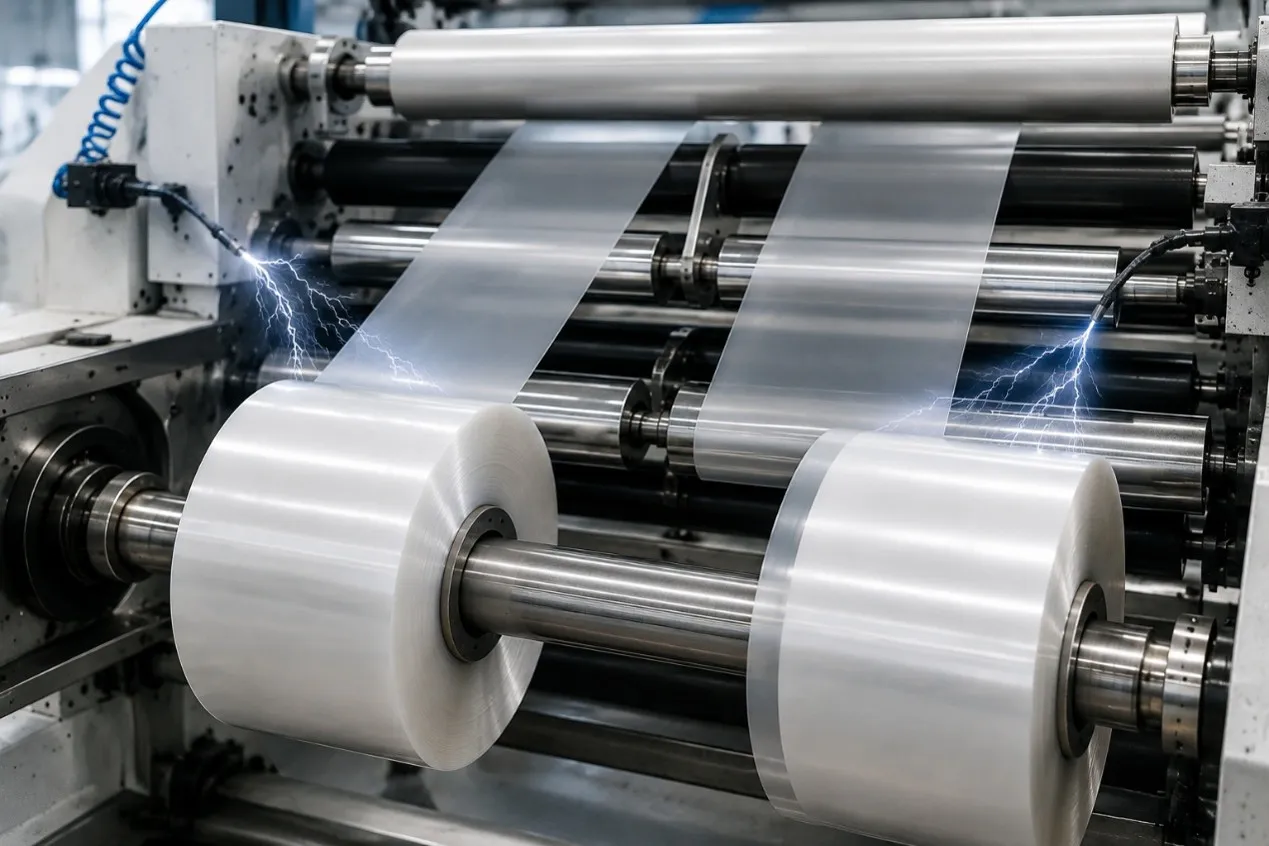
Static electricity is a common problem when slitting and rewinding plastic films, self-adhesive materials, and other roll-to-roll substrates. Operators may notice that thin film sticks to rollers, dust is attracted to the web, finished rolls become difficult to handle, or a small static discharge occurs when touching the material or machine.
The problem often becomes more noticeable as production speed increases or when the factory air is dry. Although static may appear to be a minor inconvenience, uncontrolled charge can affect web handling, finished roll quality, operator comfort, and, in environments where flammable vapors are present, safety. Understanding where the charge comes from is the first step toward controlling it effectively.
Why Does Static Electricity Build Up During Slitting?
Static charge can develop when two materials contact and then separate. During slitting, the web repeatedly contacts and separates from guide rollers, tension rollers, slitting components, and rewinding surfaces. Different materials can exchange electrical charge during these interactions, creating an imbalance on the web surface.
Plastic films such as PET, BOPP, and PE are particularly prone to retaining static because they are electrical insulators. Unlike conductive materials, the accumulated charge cannot easily flow away.
The problem can become more complicated with laminated structures, coated materials, and pressure-sensitive labelstock because several different surfaces may interact during unwinding, slitting, matrix handling, and rewinding.
Why Static Often Gets Worse at Higher Speed
When a slitter rewinder runs faster, the material passes through more contact and separation events in a shorter period of time. Higher speed can therefore increase the rate at which charge is generated, while giving less opportunity for it to dissipate.
This is why a machine may appear to run normally at setup speed but begin showing static-related problems after acceleration. If operators repeatedly need to reduce speed because the web begins sticking, attracting dust, or behaving unpredictably, static should be considered together with tension, web guiding, and material condition.
Production speed itself is not always the root cause. It often exposes weaknesses in the existing static-control system.
Dry Air Can Make the Problem More Noticeable
Environmental conditions also influence static behavior. Low relative humidity generally makes it more difficult for charge to dissipate from many material surfaces, which is why static problems are often more noticeable in dry production environments or during certain seasons.
Humidity control can sometimes help, but it should not be treated as the only solution. The appropriate humidity range depends on the material, production process, factory conditions, and other equipment requirements. Excessive humidity can create different problems for paper, adhesives, coatings, electronics, and stored materials.
For film converting, dedicated static-control equipment is usually a more targeted solution.
What Does Static Electricity Do to the Slitting Process?
One of the first signs is unstable material handling. Thin films can cling to rollers or nearby machine surfaces, making the web more difficult to control. Narrow slit rolls or trim material may also stick together instead of separating cleanly.
Static charge attracts airborne dust and small particles as well. This can contaminate the web surface and become particularly troublesome when the material will later be printed, laminated, coated, or used for labels where surface cleanliness matters.
At the rewinding section, charged layers may cling to one another or behave differently during roll formation. Static is not the only cause of poor winding, but when it appears together with incorrect tension, trapped air, or material curl, finished roll handling can become more difficult.
Operators may also experience uncomfortable static shocks when touching the machine or finished rolls. In processes involving flammable solvents or vapors, static discharge requires more serious attention and the complete installation should follow applicable electrical, ventilation, grounding, and hazardous-area safety requirements.
How Can You Tell Whether Static Is Really the Problem?
Not every unstable web is caused by static electricity. Film wrinkles may come from incorrect tension or roller alignment, lateral movement may be related to web guiding, and poor finished rolls may originate from rewind tension or taper settings.
Static becomes more likely when the problem changes significantly with production speed, humidity, material type, or season. Film sticking to machine surfaces, strong dust attraction, small discharges, or noticeable charge on finished rolls are also useful clues.
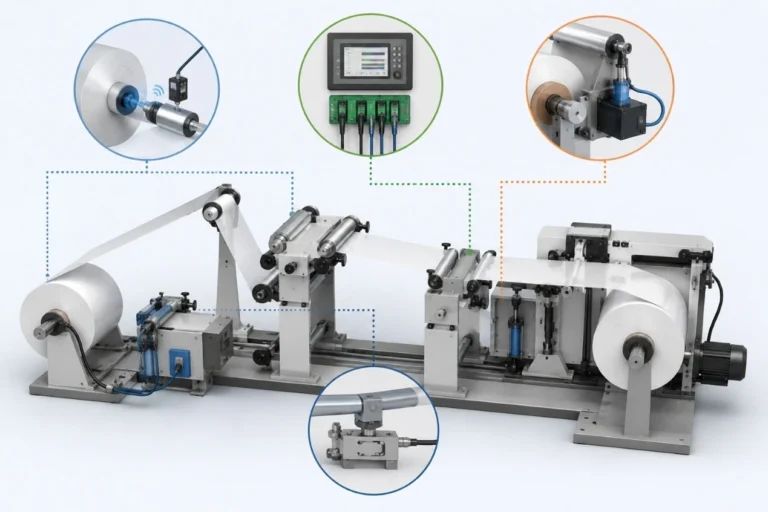
A static meter can provide a more objective way to identify high-charge areas. Measurements at different points along the web path can help determine whether charge is mainly being generated near the unwind, guide rollers, slitting section, or rewind.
This is more effective than installing a static eliminator at an arbitrary location and hoping it solves the problem.
Ground the Machine Properly, but Understand Its Limitations
Proper grounding of conductive machine components is fundamental. The machine frame, conductive rollers, and relevant equipment should have appropriate grounding according to the machine design and applicable electrical requirements.
However, grounding the machine does not automatically neutralize charge stored on a plastic web. PET, BOPP, PE, and similar films are insulating materials, so the charge may remain on the material even when the surrounding metal components are correctly grounded.
This distinction is important. Grounding provides a path for charge on conductive components, while an insulating web often requires active or passive static-control methods designed for the material itself.
Where Ionizing Static Eliminators Help
Ionizing bars are commonly used on slitting and converting equipment to neutralize electrical charge on moving webs. The device generates ions that help balance the charge on the material surface as the web passes through the treatment area.
Position matters. A static bar should be installed where it can effectively treat the charged surface without being unnecessarily far from the web or obstructed by machine components. Depending on the material and web path, more than one treatment point may be required.
For example, static may need to be controlled after unwinding, around the slitting area, or before final rewinding. The best location depends on where the charge is actually generated and where it begins to interfere with production.
Static bars also need maintenance. Dust, ink, adhesive contamination, and other deposits can reduce their effectiveness, so periodic inspection and cleaning should be part of the machine’s maintenance routine.
Web Tension and Roller Condition Still Matter
Static control should not become a substitute for correct mechanical setup. If the web is slipping excessively over rollers, making unnecessary contact, or running with unstable tension, charge generation and web-handling problems may become worse.
Rollers should be clean, correctly aligned, and able to rotate as intended. Unnecessary friction should be investigated. Stable unwind and rewind tension also helps keep the web under predictable control while the static system performs its intended function.
This is particularly important when processing thin films at higher speeds, where tension, guiding, static, and rewinding behavior can interact with one another.
Material Changes Can Require Different Static-Control Settings
A slitter that performs well with paper labelstock may behave very differently when processing PET or BOPP film. Even two film structures can generate different static levels depending on surface treatment, coating, thickness, lamination, speed, and environmental conditions.
When a new material is introduced, operators should therefore avoid assuming that the existing static-control setup will automatically be sufficient. Observe the web at low speed, identify where charge develops, and confirm that the static eliminators are correctly positioned before increasing to normal production speed.
For converters handling many different substrates, recording successful tension, speed, web-guide, rewinding, and static-control settings can make repeat jobs easier to set up.
A Better Approach to Static Control
Effective static control usually comes from combining several measures rather than relying on a single device. The machine should be properly grounded, rollers and web paths should be maintained correctly, environmental conditions should be monitored, and suitable static eliminators should be positioned where the charge is actually creating a problem.
When static suddenly becomes worse, look for what has changed. A new material batch, higher production speed, lower humidity, contaminated static bar, changed web path, or mechanical problem may explain why a previously stable process has become difficult.
Treating static electricity as part of the complete web-handling process makes troubleshooting more effective and helps avoid unnecessary adjustments to tension, knives, or web guiding.
Final Thoughts
Static electricity in film slitting is mainly a web-handling and charge-control problem, but its effects can spread throughout the converting process. It can attract dust, cause films and trim to stick, interfere with material handling, make finished rolls difficult to manage, and create unwanted discharges.
Proper machine grounding, correctly positioned ionizing equipment, clean rollers, stable web tension, suitable environmental conditions, and regular maintenance can significantly reduce these problems. For high-speed PET, BOPP, PE, and other film applications, static control should be considered as part of the slitter rewinder setup rather than something to address only after production problems appear.
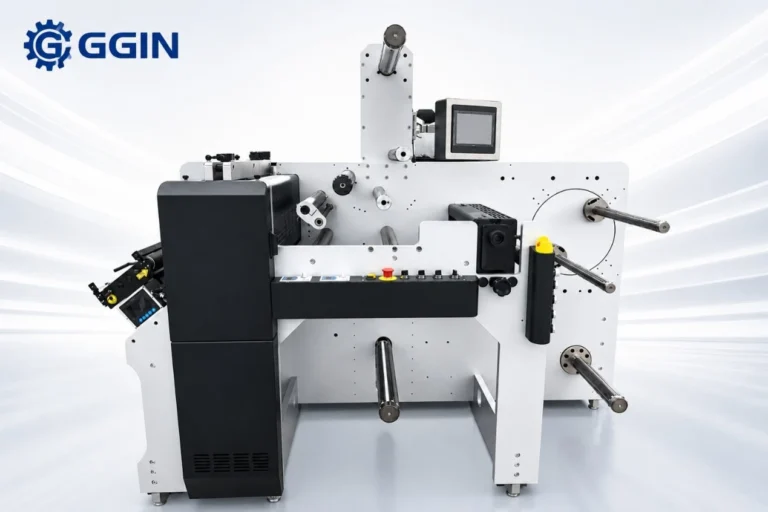
Experiencing static, unstable web handling, or winding problems during slitting? GGIN Machinery provides slitter rewinders with precise web tension control, automatic web guiding, and flexible configurations for different roll materials. Send us your material type, thickness, web width, minimum slit width, unwind and rewind diameter, and required production speed, and we can help you evaluate a suitable slitting solution.