How to Improve Plate Mounting Accuracy: A Practical Guide for Better Flexo Printing Quality
Plate mounting accuracy has a direct impact on registration, image sharpness, color consistency, and startup waste in flexographic printing. Even a modern servo-driven flexo press cannot fully compensate for printing plates that are mounted in the wrong position. Small mounting errors may become especially noticeable in multi-color labels, fine text, barcodes, screens, and other jobs requiring precise color-to-color registration.
Improving plate mounting accuracy requires more than simply aligning the plate carefully. The condition of the plate cylinder, mounting tape selection, registration marks, camera system, operator procedure, and final inspection all influence the result. This guide explains the most practical ways to improve flexo plate mounting accuracy and achieve more consistent printing quality.
1. Keep the Plate Cylinder or Sleeve Clean
Accurate mounting begins with a clean and stable surface. Dust, dried adhesive, ink residue, oil, or small particles between the mounting tape and cylinder can create unevenness and affect plate position.
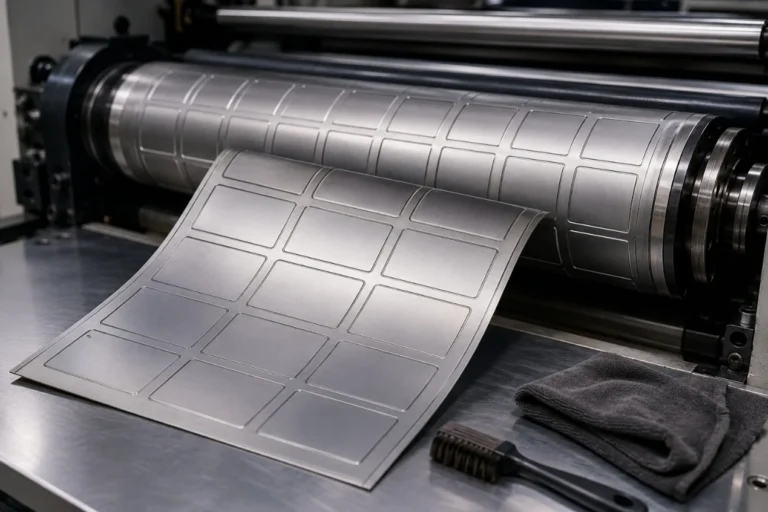
Before applying mounting tape, clean the cylinder or sleeve carefully and inspect its surface for damage. The printing plate should also be clean and free from contamination. A standardized cleaning procedure helps reduce variation between different operators and jobs.
2. Choose the Correct Plate Mounting Tape
Plate mounting tape does more than attach the printing plate to the cylinder. Its thickness, hardness, compressibility, and adhesive characteristics can influence printing pressure, dot reproduction, solid ink coverage, and plate stability.
The tape should be selected according to the printing plate, graphics, substrate, and print requirements. It is also important to apply the tape evenly without wrinkles, overlaps, or trapped air. Using inconsistent tape thickness across different color stations can make press setup more difficult.
3. Use Clear Registration Marks
Registration marks provide a reference for positioning each printing plate. Poorly designed or unclear marks make accurate alignment more difficult, particularly on multi-color jobs.
Registration marks should be consistent across all color separations and positioned where the mounting system can identify them easily. For camera-assisted plate mounting, clear marks allow operators to align the plate more precisely on the cylinder or sleeve before printing begins.
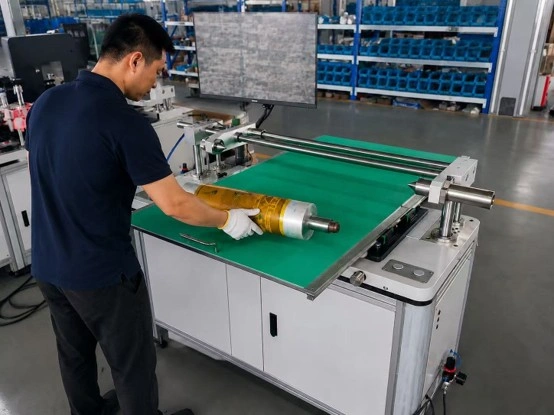
4. Use Camera-Assisted Plate Mounting
Manual visual alignment may be sufficient for simple jobs, but camera-assisted plate mounting provides greater accuracy for demanding multi-color flexographic printing.
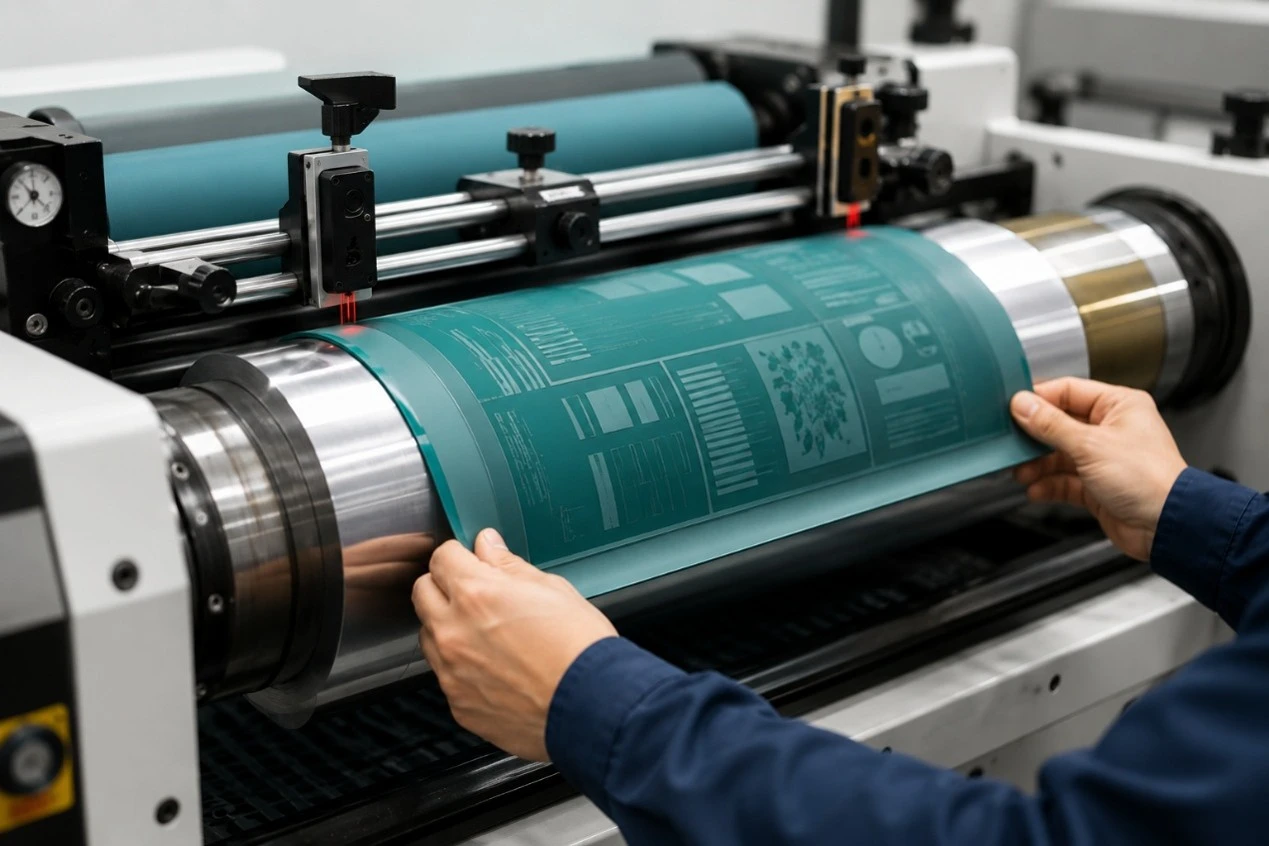
A camera plate mounting system magnifies registration marks and allows the operator to position the plate using a digital image rather than relying only on visual judgment. Two-camera systems can monitor reference points across the plate width simultaneously, helping control both lateral position and alignment.
For companies producing frequent repeat jobs or high-quality labels, camera-assisted mounting can also reduce setup time and startup material waste.
5. Position the Mounting Tape Accurately
Even when the plate itself is aligned correctly, poorly applied mounting tape can affect the final result. Tape should be positioned evenly on the cylinder without gaps, overlaps, wrinkles, or unnecessary stretching.
When joining tape edges, avoid creating raised areas that can change impression pressure. The protective liner should be removed carefully during mounting so that dust and contamination do not reach the adhesive surface.
6. Avoid Air Bubbles During Plate Mounting
Air trapped between the plate, tape, and cylinder can create uneven plate height and may eventually cause plate lifting during production. This can affect print quality and force the operator to stop the press for correction.
Apply the plate gradually with controlled pressure instead of attaching the entire surface at once. A mounting roller can help create uniform contact and remove trapped air. Special attention should be paid to the leading and trailing edges of the plate, where lifting is more likely to occur.
7. Check Plate Position Before Final Pressure
Once the printing plate is fully pressed onto high-adhesion mounting tape, repositioning it becomes more difficult and may damage the plate or tape. It is therefore better to confirm alignment before applying full pressure.
Camera systems are particularly useful at this stage because the operator can verify the position of registration marks before completing the mounting process. If an error is detected, correction is easier before the plate is firmly bonded.
8. Maintain Consistent Mounting Pressure
Uneven pressure during mounting can cause different areas of the plate to bond differently to the tape. Excessive pressure is also unnecessary and may affect the compressible structure of some mounting tapes.
Use a consistent mounting procedure and, where possible, a roller to apply uniform pressure across the plate surface. Standardizing this process improves repeatability between operators and different printing jobs.
9. Inspect the Mounted Plate Before Printing
Plate mounting should include a final inspection before the cylinder or sleeve is installed on the press. Check registration marks, plate edges, tape joints, bubbles, wrinkles, contamination, and overall alignment.
For critical jobs, measuring or camera-based verification can identify errors before substrate and ink are consumed on the printing machine. Correcting a mounting problem at this stage is usually much less expensive than discovering it after production has started.
10. Standardize Plate Mounting Procedures
One of the most effective ways to improve long-term mounting accuracy is to standardize the complete process. Operators should follow the same procedures for cleaning, tape application, registration alignment, plate positioning, pressure application, and final inspection.
For repeat jobs, recording plate specifications, mounting tape type, cylinder information, registration references, and other successful settings can reduce preparation time. Advanced plate mounting systems may also provide digital positioning or job memory functions that further improve repeatability.
How Plate Mounting Accuracy Affects Flexo Printing
Poor plate mounting can create registration errors that operators may incorrectly try to solve by adjusting the printing press. This increases setup time and may create unnecessary material waste without correcting the actual source of the problem.
Accurate plate mounting provides a better starting point for automatic registration systems and allows the press to reach acceptable print quality faster. It can also improve image sharpness, color-to-color consistency, and repeatability between production runs.
For short-run label production, this becomes particularly important because startup waste represents a larger percentage of the total order.
Manual vs Camera Plate Mounting Accuracy
Manual plate mounting requires greater operator experience and is suitable for applications where registration requirements are relatively simple. Camera-assisted systems provide magnified positioning references and reduce dependence on visual estimation, making them more suitable for multi-color and higher-precision work.
The best solution depends on job complexity, production volume, number of colors, required registration accuracy, and budget. A company printing simple one- or two-color jobs may not require the same mounting technology as a converter producing high-quality six- or eight-color labels every day.
Conclusion
Improving plate mounting accuracy requires careful control of the entire mounting process, including cylinder cleanliness, mounting tape selection, registration marks, plate positioning, air removal, mounting pressure, and final inspection. Camera-assisted plate mounting can further improve positioning accuracy and repeatability, especially for demanding multi-color flexographic printing.
Accurate plate mounting does not only improve registration. It can also shorten press setup, reduce startup waste, improve repeat-job consistency, and allow the flexographic press to reach stable production more quickly. For label and flexible packaging manufacturers, a standardized and precise plate mounting process is therefore an important foundation for better flexo printing quality.