Label Die Cutting Accuracy Problems: Causes and How to Fix Them
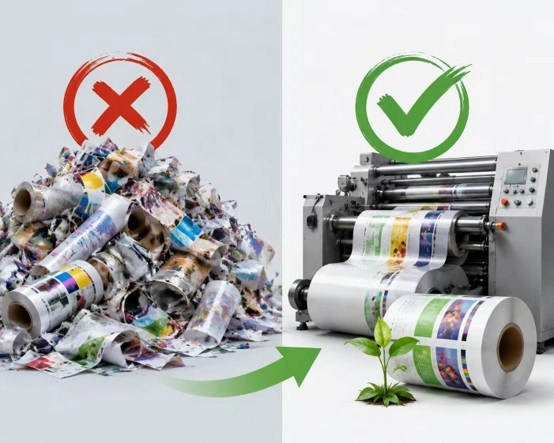
Accurate die cutting is essential for producing high-quality self-adhesive labels. Even small cutting deviations can result in uneven label borders, damaged release liners, incomplete cuts, or difficulties during matrix stripping and automatic label application. These problems not only affect the appearance of finished labels but can also increase material waste and reduce production efficiency.
However, not every die cutting defect is caused by the cutting tool itself. Web tension, registration control, material properties, cutting pressure, and machine stability all influence the final result. Understanding the type of accuracy problem is the first step toward finding an effective solution.
What Does Die Cutting Accuracy Mean in Label Production?
In label converting, die cutting accuracy involves several different aspects of the process. The cutting position must remain aligned with the printed graphics, the finished label dimensions must meet the required specifications, and the cutting depth must be controlled so that the adhesive face material is cut without unnecessarily damaging the release liner.
These requirements are closely related, but they are not the same. A machine may produce labels with consistent dimensions while the cutting position gradually shifts relative to the printed image. Similarly, a label may be correctly positioned but still suffer from incomplete cutting or liner damage.
Identifying which type of accuracy problem is occurring helps operators avoid unnecessary adjustments.
When the Die Cut Does Not Align with the Printed Image
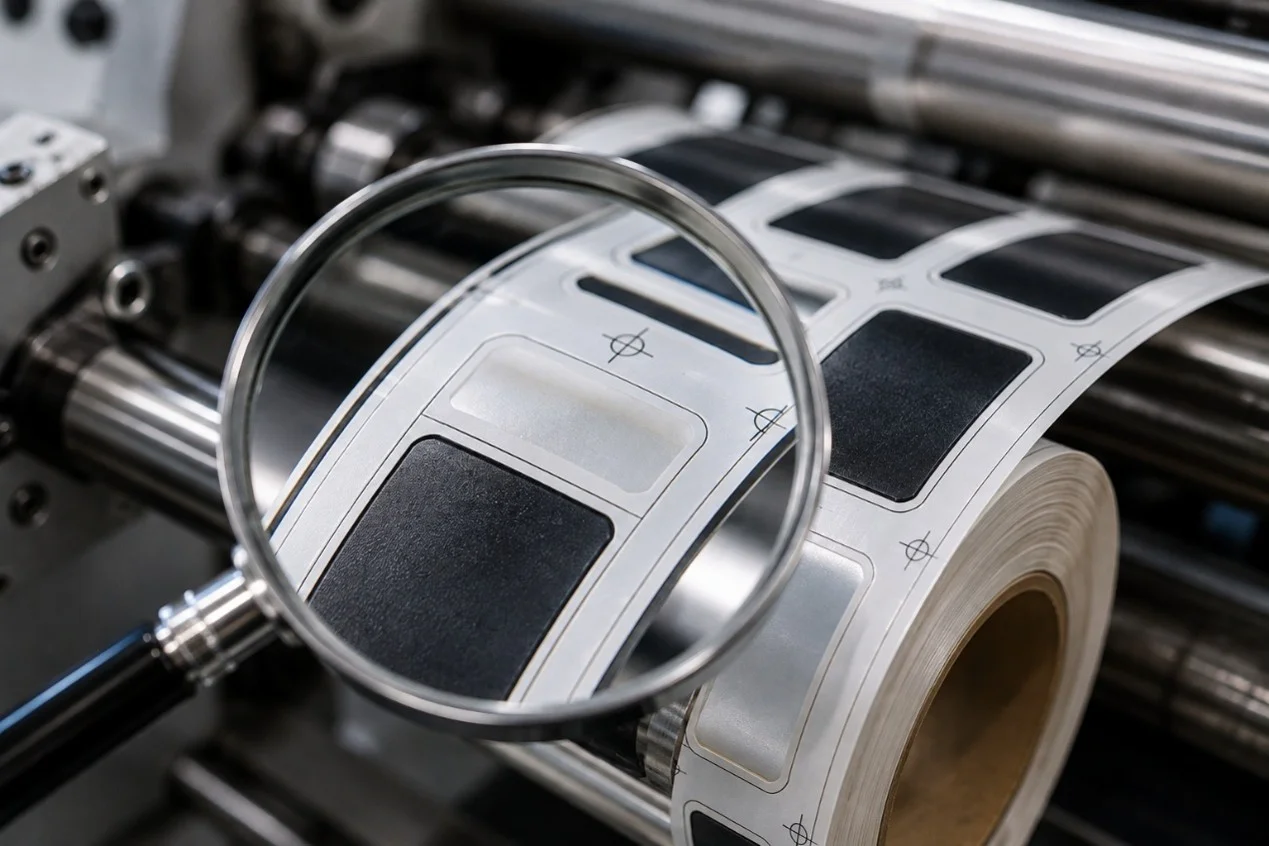
One of the most common problems in printed label converting is die cutting registration error. The cutting outline may appear too far forward, backward, or sideways relative to the printed graphics.
If the offset remains constant throughout production, the problem may be related to an incorrect registration setting, sensor position, or initial cutting position. A consistent error is usually easier to correct than one that changes continuously.
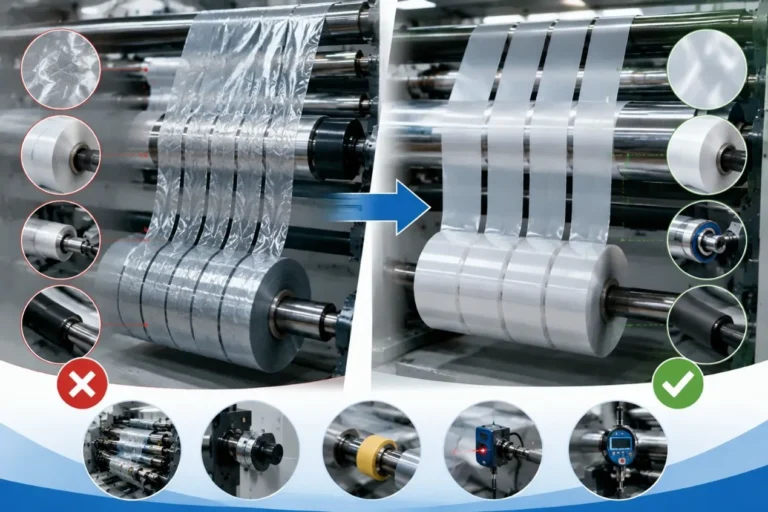
When the cutting position drifts gradually, web tension and material movement should be investigated. Unstable unwind tension, web stretching, slipping rollers, or variations in the incoming material can change the relationship between the printed repeat and the cutting position.
Registration sensors also require attention. Poor contrast between the registration mark and background, contamination on the sensor, or incorrect detection settings can cause unreliable positioning signals.
Before changing the die position repeatedly, operators should confirm that the registration mark is detected consistently and that the web remains stable.
Why Cutting Accuracy Can Change at Higher Speeds
A die cutting machine may perform well during low-speed testing but show increasing registration variation after acceleration.
This often indicates that the problem is related to the dynamic behavior of the machine rather than the basic cutting position. Acceleration and deceleration can affect web tension, while roller slip, mechanical vibration, and inconsistent material feeding may become more noticeable at higher speeds.
Servo-driven systems can provide precise motion control and coordinated positioning, but they still depend on stable material feeding, suitable mechanical conditions, and correctly configured control parameters.
When accuracy decreases only at higher speeds, reducing the speed temporarily can help confirm the relationship. The next step is to examine tension response, registration signals, drive synchronization, and the condition of the web transport system rather than simply increasing cutting pressure.
Inconsistent Cutting Depth and Release Liner Damage
For pressure-sensitive labels, the cutting tool normally needs to cut through the face material and adhesive while leaving the release liner sufficiently intact. This process is commonly called kiss cutting.
If cutting pressure is too low, some labels may remain connected to the surrounding matrix, causing problems during waste removal. Excessive pressure can damage the release liner, increase tool wear, and create difficulties during label dispensing.
However, pressure is not the only factor affecting cutting depth. Differences in material thickness, liner construction, adhesive characteristics, die height, and anvil condition can also influence the result.
Operators should inspect both the finished labels and the release liner. A clean label edge does not necessarily mean the cutting depth is correct if the liner has been weakened.
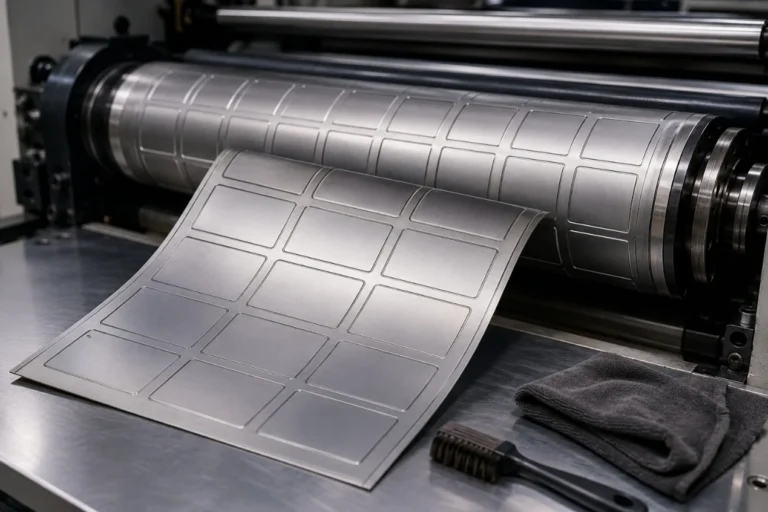
For rotary die cutting systems, the condition of the die, magnetic cylinder where applicable, anvil roller, and any gap-adjustment mechanism should be checked according to the machine and tooling manufacturer’s recommendations.
When Finished Label Dimensions Are Inconsistent
Dimensional errors may appear as variations in label length, width, shape, or spacing between labels.
If every finished label has the same dimensional error, the die specification or job setup should be checked first. The actual cutting tool dimensions must match the required label design, including the intended repeat length and cutting geometry.
If dimensions vary during production, the problem may involve material stretching, unstable feeding, roller slip, or mechanical movement. Printed repeat variation from the upstream printing process can also make it difficult to maintain consistent registration, even when the die cutting machine is functioning correctly.
It is important to distinguish between a cutting tool that produces an incorrect shape and a web transport system that changes the position of an otherwise correct cutting pattern.
Tool Wear, Mechanical Condition, and Cutting Consistency
Cutting tools gradually wear during production, especially when processing abrasive materials or operating with excessive pressure. Worn cutting edges may cause incomplete cuts, burrs, or inconsistent matrix stripping.
Damaged magnetic cylinders, contaminated mounting surfaces, worn bearings, and problems with the anvil roller can also affect cutting performance. In rotary systems, the cutting components must maintain suitable mechanical contact throughout operation.
Routine cleaning and inspection help prevent small mechanical problems from developing into repeated production defects.
Replacing a cutting tool should not be the first response to every accuracy problem. If registration remains unstable because of web tension or sensor detection, installing a new die will not correct the underlying cause.
How to Improve Die Cutting Accuracy in Daily Production
A reliable setup begins with checking the incoming material, cutting tool, web path, and registration system. Operators should confirm that the material is properly centered, tension is stable, and the cutting tool is installed correctly before starting production.
Initial testing should be carried out at a controlled speed. Finished samples should be inspected for cutting position, dimensions, edge quality, liner condition, and matrix stripping performance. Once these results are acceptable, production speed can be increased gradually while monitoring whether accuracy remains consistent.
Recording successful machine settings for repeat orders can reduce setup time and unnecessary adjustments. This is particularly useful for converters processing different label materials, thicknesses, adhesive constructions, and repeat lengths.
Preventive maintenance also plays an important role. Clean sensors, properly maintained rollers, stable tension systems, and correctly handled cutting tools support more repeatable production.
Choosing a Die Cutting Machine for Consistent Accuracy
When evaluating a new label die cutting machine, buyers should look beyond the advertised cutting accuracy or maximum mechanical speed.
The machine should be suitable for the intended material, label size, production speed, and converting process. Registration control, web tension management, mechanical rigidity, cutting system design, and ease of adjustment all influence practical performance.
Full rotary die cutting is often suitable for repeat production with compatible tooling and consistent job requirements. Intermittent rotary die cutting can provide flexibility for different label lengths and shorter production runs, while flatbed die cutting remains useful for certain materials and cutting applications.
The most suitable configuration depends on the product and production requirements rather than one cutting method being universally more accurate than another.
Final Thoughts
Label die cutting accuracy depends on the combined performance of the registration system, web transport, cutting tool, pressure control, and material. A cutting position that remains consistently offset requires a different approach from one that drifts during production, while cutting-depth problems should not be confused with dimensional errors.
By identifying the actual type of deviation, maintaining stable web tension, checking registration signals, using suitable tooling, and monitoring cutting quality at production speed, converters can reduce waste and achieve more consistent label quality.
Looking for a reliable label die cutting solution? GGIN Machinery provides rotary, intermittent rotary, and flatbed die cutting machines for different label converting applications. Share your label material, web width, label size, cutting requirements, and target production speed, and we can help you evaluate a suitable machine configuration.