Slitting Speed vs Quality: How to Increase Productivity Without Compromising Accuracy
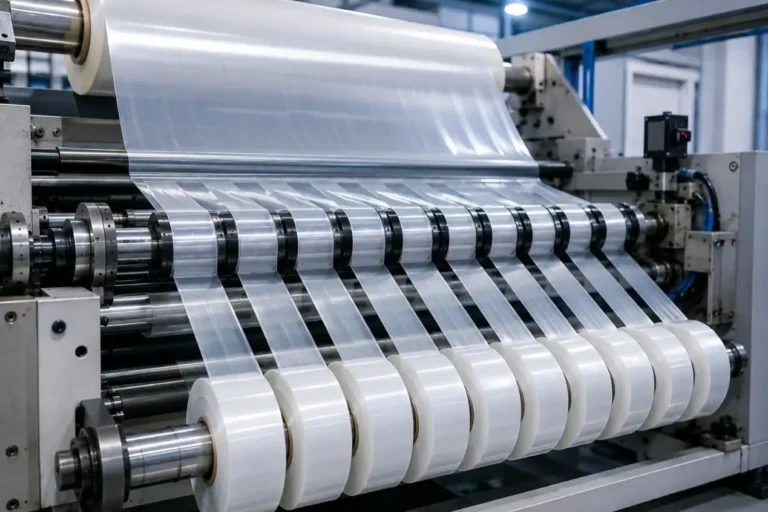
In slitting and rewinding, higher machine speed is often associated with greater productivity. However, running a slitter rewinder faster does not always mean producing more usable finished rolls. As speed increases, web tension becomes more demanding, knife performance may change, and rewinding stability can become harder to maintain. If these factors are not properly controlled, the additional output may be offset by material waste, rejected rolls, and unexpected machine stops.
For label converters and flexible packaging manufacturers, the real objective is not simply to reach the maximum machine speed. It is to find a stable operating speed that delivers accurate slit widths, clean edges, consistent roll quality, and reliable production efficiency.
Why Maximum Slitting Speed Is Not Always the Best Production Speed
Every slitter rewinder has a rated maximum mechanical speed, but its practical operating speed depends on the material being processed, the required slit widths, the cutting system, and the rewinding configuration.
For example, a machine may handle relatively thick paper labelstock smoothly at higher speeds while requiring more careful adjustments when processing thin PET or BOPP film. Narrow finished rolls can also introduce different rewinding challenges compared with wider rolls, particularly when several rolls are produced simultaneously.
This is why experienced operators usually evaluate production speed based on actual cutting and winding performance rather than relying only on the machine’s technical specifications.
What Changes When Slitting Speed Increases?
As the web moves faster, the machine must maintain stable tension through acceleration, continuous operation, and deceleration. Even small tension fluctuations can become more noticeable at higher speeds, potentially causing web wrinkles, stretching, lateral movement, or unstable cutting.
The slitting knives also need to maintain consistent contact and cutting geometry. Worn blades, incorrect shear knife overlap, excessive side pressure, or mechanical vibration may create rough edges, dust, or burrs. These problems can become more apparent as speed increases.
At the rewinding section, the growing roll diameter changes the winding conditions. If rewind tension, taper tension, or differential winding is not correctly adjusted, finished rolls may develop uneven hardness, telescoping, or poor edge alignment.
The important point is that higher speed places greater demands on the entire web-handling system, not just the slitting knives.
Cutting Accuracy Depends on Web Stability
When slit widths begin to vary at higher speeds, operators may immediately suspect incorrect knife positioning. However, the cutting knives are not always responsible.
If the web moves laterally before entering the slitting section, the cutting position relative to printed graphics or material edges can change even when the knives remain mechanically fixed. Unstable web tension, incorrect guiding settings, roller misalignment, and incoming material defects can all contribute to this problem.
For printed or die-cut label materials, accurate web guiding is especially important because the slitting position must remain consistent with the printed or converted pattern.
Before adjusting knife positions, check whether the web is running smoothly and whether the guiding system can respond effectively at the intended production speed.
Clean Slit Edges Matter More Than Machine Speed
A higher production speed has little value if the finished rolls have rough edges, excessive dust, or damaged material.
The correct slitting method should be selected according to the substrate. Razor slitting is used for certain thin films, while shear slitting is widely applied where controlled cutting action and clean edges are required. Crush slitting is another option for suitable materials, but each method has its own limitations.
Knife condition and adjustment are equally important. A sharp blade with the correct geometry can maintain stable cutting performance, while a worn or incorrectly adjusted knife may generate defects even at moderate speeds.
Rather than increasing speed immediately after changing the knives, operators should confirm cutting quality at a controlled speed and then gradually increase production while inspecting the slit edges.
Rewinding Can Become the Real Speed Limitation
In many applications, the slitting section is capable of running faster than the rewinding section can reliably handle.
As finished rolls increase in diameter, the winding system must control tension and roll formation without creating excessive hardness or allowing loose layers to develop. This becomes particularly important when rewinding multiple narrow rolls, where small differences in thickness and diameter may affect individual roll tension.
Differential rewinding can help compensate for these variations, while appropriate taper tension settings can improve roll structure as diameter increases.
If finished rolls begin telescoping, shifting, or developing uneven hardness at higher speeds, the solution may lie in the rewinding settings rather than the cutting section.
Material Properties Determine the Practical Speed
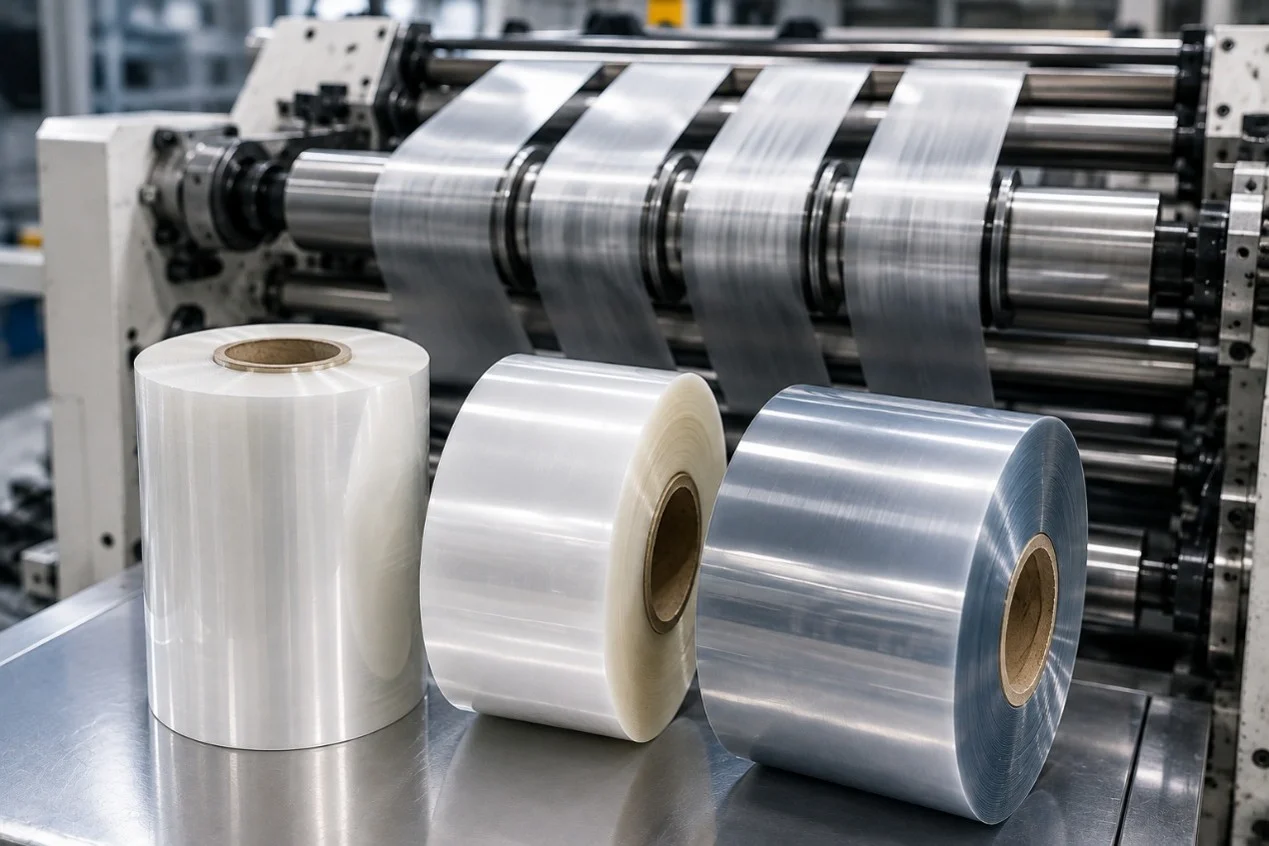
Different substrates behave differently under tension and cutting forces. Paper labelstock, PET, BOPP, PE, laminated films, and die-cut label materials cannot always be processed using the same machine settings.
Thin films may be sensitive to stretching, wrinkles, static electricity, and trapped air during rewinding. Paper-based materials may generate dust or experience edge damage depending on the cutting method and blade condition. Laminated structures can introduce additional challenges because their layers may respond differently to tension and cutting pressure.
Material thickness consistency and the quality of the incoming master roll also influence the result. A poorly wound or uneven master roll can limit production speed even when the slitter rewinder itself is operating correctly.
For this reason, successful settings from one material should be treated as a starting reference rather than a universal solution.
Finding the Most Efficient Operating Speed
The most effective approach is to establish a stable baseline before increasing production speed. Begin with suitable knife settings, web tension, guiding parameters, and rewinding conditions, then inspect the first finished rolls for width accuracy, edge quality, winding hardness, and overall appearance.
Once the process is stable, increase speed gradually while monitoring the same quality indicators. If defects begin to appear, identify which part of the process has become unstable before making adjustments.
It is also useful to compare production results at different speeds. A slightly lower operating speed may deliver more acceptable finished rolls per hour if it reduces material waste, machine stops, and repeated adjustments.
The most productive speed is therefore not necessarily the highest speed displayed on the control panel, but the speed that produces the greatest amount of acceptable material within the available production time.
How Modern Slitter Rewinders Support Higher Productivity
Modern servo-driven slitter rewinders can help improve speed stability through more precise motor control, coordinated acceleration and deceleration, closed-loop tension control, and automatic web guiding. Depending on the machine configuration, differential rewinding, automatic knife positioning, and other automation features may further improve production consistency and reduce setup time.
However, automation cannot completely eliminate the effects of unsuitable material, damaged knives, poor incoming roll quality, or incorrect operating parameters.
For converters handling different substrates and order sizes, repeatable setup settings and reliable tension control are often more valuable than maximum speed alone. Reducing changeover time, minimizing startup waste, and maintaining consistent finished roll quality can improve overall productivity without pushing the machine beyond its practical operating limits.
Final Thoughts
Balancing slitting speed and quality requires a complete understanding of the cutting and rewinding process. Stable web tension, accurate guiding, suitable knives, controlled rewinding, and consistent material quality all determine how fast a slitter rewinder can operate without compromising the finished product.
Instead of focusing only on maximum machine speed, converters should evaluate usable output, slit accuracy, edge quality, roll hardness, and production waste together. A stable and repeatable process usually provides better long-term productivity than operating at the highest possible speed with frequent quality problems.
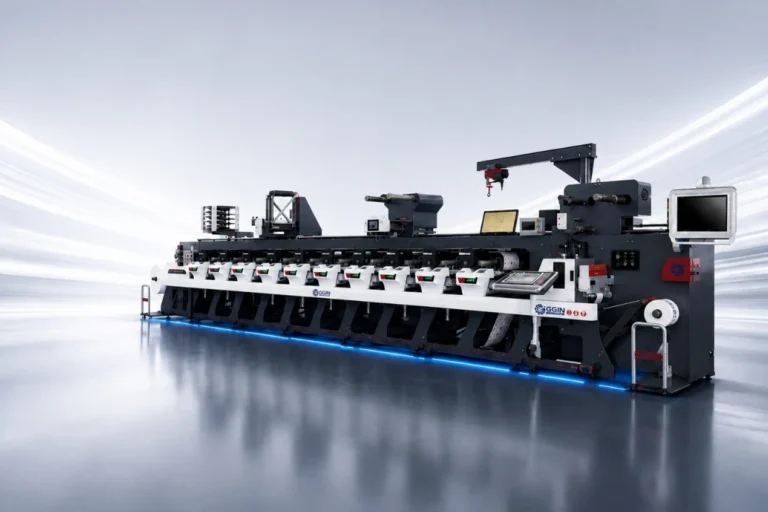
Looking to improve your slitting productivity? GGIN Machinery provides slitter rewinders with servo-driven control, web guiding, and flexible slitting and rewinding configurations for different label and roll-material applications. Share your material type, web width, slit width, roll diameter, and required production speed, and we can help you evaluate a suitable machine configuration.