Slitting Machine vs Rewinding Machine: Key Differences and Applications
Slitting machines and rewinding machines are widely used in label converting, flexible packaging, paper processing, and other roll-to-roll manufacturing industries. Although these machines often appear in the same production line, they perform different functions and are designed for different production requirements.
A slitting machine primarily divides wide rolls into narrower widths, while a rewinding machine transfers material from one roll to another to improve winding quality, adjust roll length, or support inspection and other converting operations. Understanding these differences can help manufacturers select suitable equipment, reduce unnecessary investment, and improve production efficiency.
What Is a Slitting Machine?
A slitting machine is designed to cut a wide roll of material into two or more narrower rolls. It is commonly used for self-adhesive labels, paper, PET film, BOPP film, laminated materials, and other roll products.
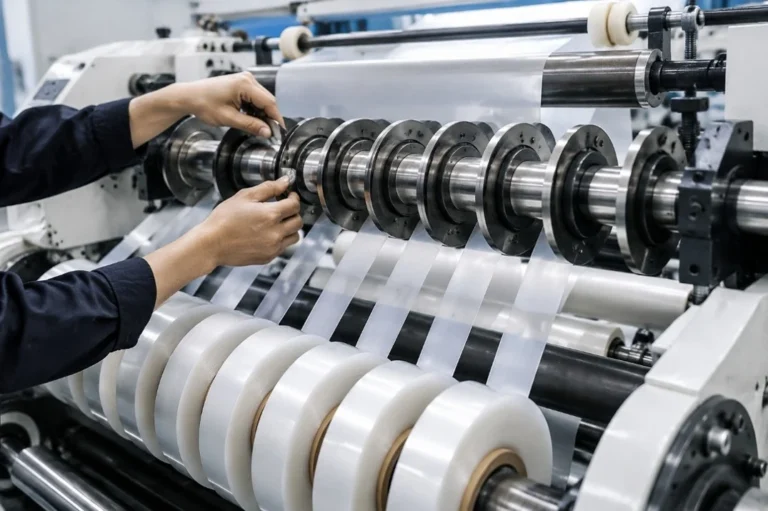
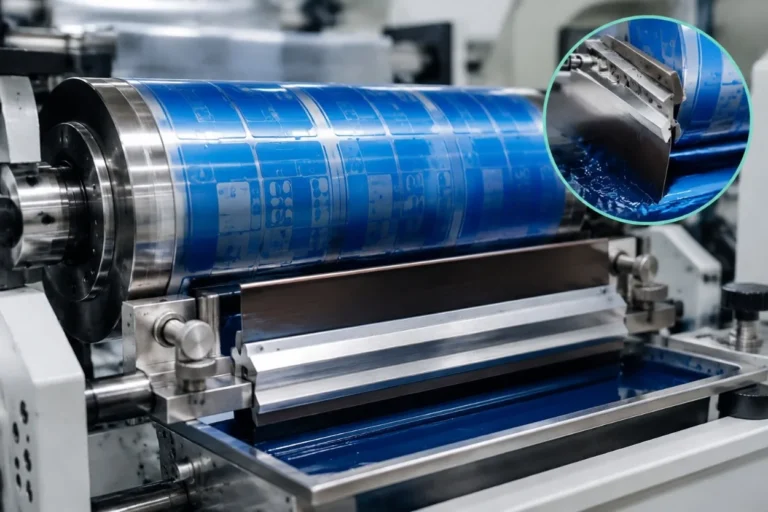
During operation, the master roll is unwound and guided through a cutting section, where knives divide the material according to the required slit widths. The separated webs are then collected into finished rolls, usually through an integrated rewinding system.
Different cutting methods are available depending on the material. Razor slitting is suitable for certain thin films, shear slitting is widely used for applications requiring controlled cutting performance, and crush slitting can be used for selected paper and other materials.
Accurate knife positioning, stable web tension, automatic web guiding, and suitable rewinding control are important for maintaining consistent slit widths and finished roll quality.
What Is a Rewinding Machine?
A rewinding machine transfers material from an existing roll onto another core or winding shaft without necessarily changing the material width. Its main purpose is to control the rewinding process rather than divide the web into narrower sections.
Rewinding equipment is commonly used to adjust roll length, improve roll formation, transfer material onto different core sizes, or prepare smaller rolls for downstream production.
Some machines also incorporate inspection systems that allow operators to identify printing defects, remove damaged sections, or correct certain roll-quality problems. These machines are often called inspection rewinders and are widely used in the label printing industry.
Rewinding machines may use different tension-control systems and winding configurations depending on the substrate, finished roll diameter, production speed, and application.
The Main Difference Is the Production Purpose
The fundamental difference between slitting and rewinding equipment is whether the material needs to be divided into narrower widths.
A slitting machine includes a cutting system that separates the web into the required widths. A rewinding machine, by contrast, generally focuses on transferring and controlling the material during winding.
For example, a manufacturer receiving a 1,000 mm-wide master roll and needing ten 100 mm-wide rolls requires a suitable slitting machine. If the same manufacturer only needs to rewind an existing roll into shorter lengths without changing its width, a rewinding machine may be sufficient.
However, machine names are not always used consistently across the industry. Many slitting machines include rewinding functions, while some rewinders can be equipped with optional slitting units. The actual machine configuration is therefore more important than its product name.
What Is a Slitter Rewinder?
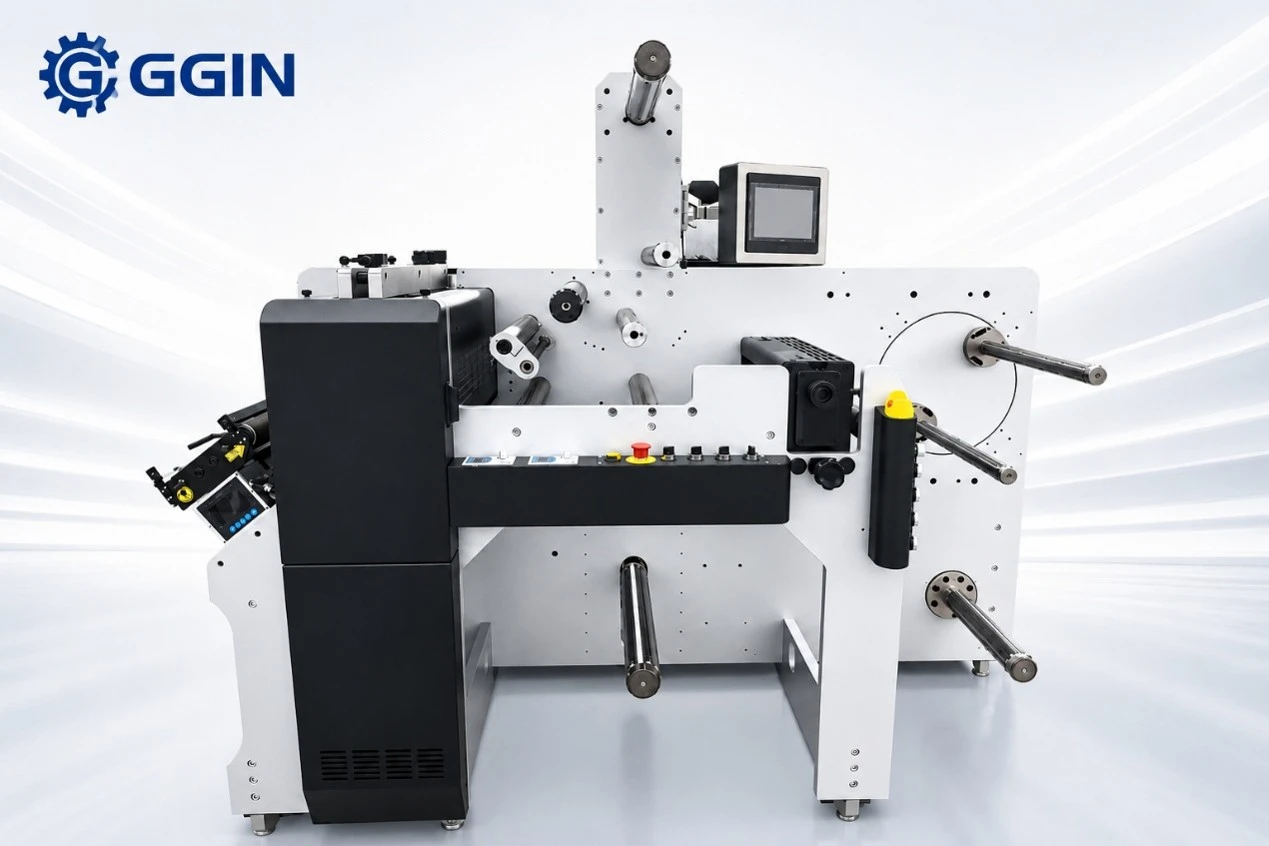
A slitter rewinder combines slitting and rewinding functions in one machine. It unwinds a master roll, cuts the material into narrower strips, and rewinds the strips into finished rolls during a continuous production process.
This configuration is widely used in label converting, flexible packaging, and paper processing because it eliminates the need to transfer material between separate cutting and winding machines.
Depending on the design, slitter rewinders may include servo-driven tension control, automatic web guiding, shear or razor knife systems, differential rewinding shafts, and other features.
The appropriate configuration depends on the material and finished roll requirements. For example, thin films may require particularly stable tension and suitable static control, while narrow label rolls may benefit from winding systems that accommodate differences between individual roll diameters.
| Comparison | Slitting Machine | Rewinding Machine | Slitter Rewinder |
| Main function | Cut material into narrower widths | Rewind material into new rolls | Slit and rewind |
| Cutting system | Required | Usually not required | Required |
| Rewinding function | Usually integrated | Main function | Integrated |
| Width adjustment | Yes | Generally no | Yes |
| Roll inspection | Optional | Available on inspection models | Optional |
| Typical application | Material width conversion | Roll inspection and length adjustment | Label and film converting |
| Main consideration | Slitting accuracy | Winding quality | Cutting and winding performance |
When Is a Rewinding Machine the Better Choice?
A dedicated rewinding machine is often more practical when the material has already been slit to the required width and the main task is roll inspection, length adjustment, or rewinding.
In label production, inspection rewinders are frequently used after printing or die cutting. Operators can check printed labels, identify defects, remove unacceptable sections, and prepare finished rolls for packaging or automatic labeling applications.
Some specialized rewinders can also support coreless winding, automatic roll changes, or other finishing operations, depending on the machine design.
If cutting is not required, a dedicated rewinder may provide a simpler and more economical solution than purchasing a full slitter rewinder.
How to Choose the Right Machine
The selection process should begin with the required finished product rather than the machine’s maximum speed.
If your production requires dividing wide materials into narrower rolls, a slitting machine or slitter rewinder is the appropriate starting point. If your main requirement is inspection, roll length adjustment, or improving winding quality without changing width, a rewinding machine may be more suitable.
Material properties should also be considered. Paper, self-adhesive labels, PET, BOPP, PE, and laminated films have different tension, cutting, and winding requirements. A machine designed for paper labelstock may not be suitable for processing very thin films without an appropriate configuration.
Other important specifications include maximum web width, minimum slit width where applicable, unwind and rewind diameters, core sizes, production speed, and automation requirements.
Manufacturers should also consider their production workflow. A company handling frequent small label orders may prioritize quick changeovers and inspection functions, while a converter processing large master rolls may require higher-capacity slitting and rewinding equipment.
Why Winding Quality Matters for Both Machines
Although slitting and rewinding machines serve different purposes, both depend on proper web handling and winding control.
Incorrect tension can lead to loose rolls, excessive hardness, wrinkles, telescoping, or damaged material. Poor web alignment can also affect finished roll appearance and create difficulties during downstream processing.
As the rewind diameter increases, the winding system must adjust its torque or tension control according to the required winding profile. For certain materials, taper tension can help maintain suitable roll structure throughout production.
A machine should therefore be evaluated not only by its cutting or rewinding capability but also by the quality and consistency of its finished rolls.
Final Thoughts
Slitting machines and rewinding machines perform different but closely related functions. Slitting equipment divides wide rolls into narrower widths, while rewinding equipment focuses on transferring, inspecting, and preparing material rolls. A slitter rewinder combines cutting and winding into one production process.
Choosing the right equipment depends on your material, required finished roll dimensions, production workflow, and quality expectations. Understanding these differences can help avoid unnecessary equipment costs and improve converting efficiency.
Looking for a slitting or rewinding solution? GGIN Machinery provides slitter rewinders, inspection rewinders, and other converting equipment for different label and roll-material applications. Share your material type, web width, finished roll size, core diameter, and production requirements, and we can help you evaluate a suitable machine configuration.