Servo vs Gear Driven Flexo Printing Machines: Which Is Better?
Choosing between a servo-driven and a gear-driven flexographic printing machine is an important decision for label printers and packaging manufacturers. Both technologies can produce high-quality printed products, but they differ in drive control, production flexibility, maintenance requirements, and investment costs.
As printing jobs become more demanding and customers expect shorter lead times, manufacturers are paying greater attention to registration accuracy, setup efficiency, and automation. Understanding how servo and gear-driven flexo presses operate can help buyers select a machine that matches their production requirements without investing in unnecessary features.
How Does a Gear-Driven Flexo Printing Machine Work?
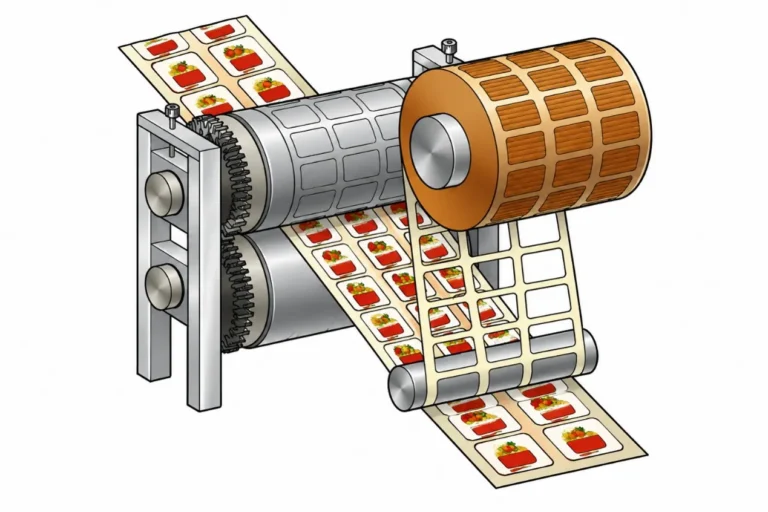
Traditional gear-driven flexo printing machines use mechanical gears and transmission components to synchronize the printing cylinders and other driven parts of the press. Depending on the machine design, power may be distributed through a common mechanical drive system.
This arrangement has been widely used in flexographic printing for many years. Its main advantages include relatively straightforward mechanical operation, established technology, and potentially lower initial equipment costs.
For manufacturers producing relatively consistent jobs with limited format changes, a well-maintained gear-driven press can provide reliable performance.
However, mechanical gear systems require proper lubrication, alignment, and regular maintenance. Gear wear, backlash, and transmission vibration may affect printing stability over time, particularly when the equipment is poorly maintained or operated outside its intended conditions.
Changing printing repeat lengths may also require replacing gears or other mechanical components, depending on the press design.
How Does a Servo-Driven Flexo Printing Machine Work?
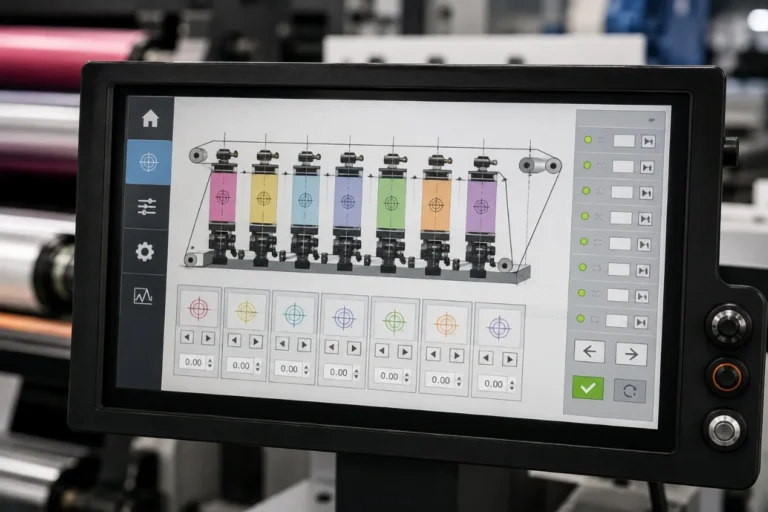
A servo-driven flexo printing machine uses electronically controlled motors to coordinate the movement of printing cylinders and other machine components.
In a fully servo-driven or gearless configuration, individual printing units can be synchronized electronically without relying on a traditional common mechanical gear train. This allows more flexible control of printing positions, speed changes, and machine operation.
Servo technology is especially useful for multi-color label printing, where accurate registration and frequent job changes are important.
However, not every machine described as a servo flexo press is completely gearless. Some configurations use servo motors together with mechanical gears or other transmission components. Buyers should therefore confirm the actual drive structure rather than assuming that all servo machines operate in the same way.
Registration Accuracy and Print Quality
Registration accuracy is one of the main considerations when comparing these two technologies.
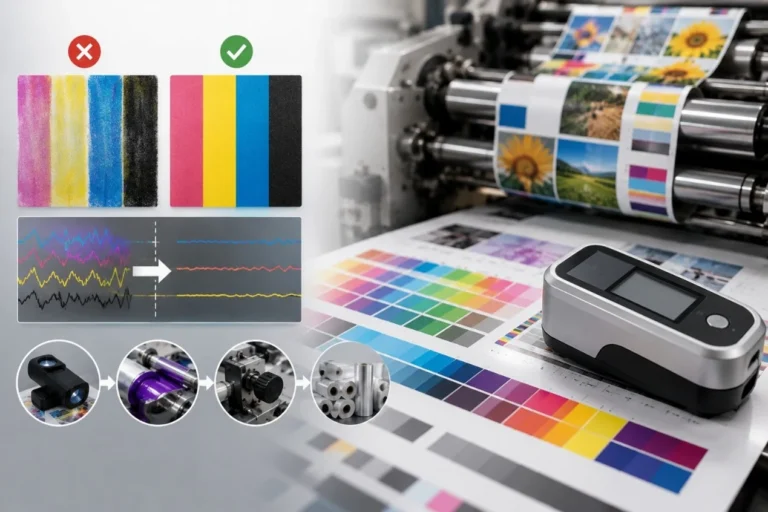
Servo-driven systems can provide precise electronic synchronization and allow registration adjustments through the machine’s control system. Depending on the configuration, automatic registration features may also help reduce setup waste and maintain alignment during production.
Gear-driven presses rely more heavily on mechanical synchronization. A properly designed and maintained system can still achieve good registration, but mechanical wear, gear condition, and adjustment requirements may influence long-term consistency.
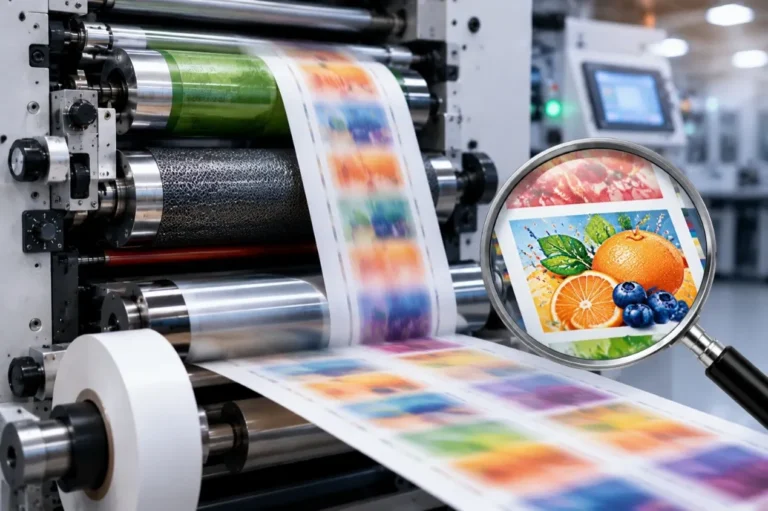
Nevertheless, servo control alone does not guarantee better printing quality. Plate mounting accuracy, anilox roller condition, printing pressure, substrate characteristics, and web tension also play important roles.
When evaluating registration performance, buyers should request printing samples and machine demonstrations under realistic production conditions.
Production Speed and Job Changeover Efficiency
Maximum machine speed is often highlighted in equipment quotations, but actual production efficiency depends on more than the rated speed.
Servo-driven flexo presses can offer advantages during acceleration, deceleration, registration adjustment, and job changeovers. Electronic control may reduce certain manual adjustments and improve repeatability when switching between production jobs.
This can be particularly valuable for label converters handling multiple designs, short production runs, and frequent order changes.
Gear-driven machines may remain economical for longer production runs where job specifications change less frequently. Once the machine is correctly set up, stable production can be maintained without constant adjustments.
Rather than comparing maximum speed alone, manufacturers should consider setup time, material waste, average running speed, and the number of jobs completed per shift.
Maintenance and Operating Costs
Gear-driven flexo presses require attention to mechanical transmission components, including gears, bearings, lubrication systems, and alignment. Replacement parts may be relatively straightforward for common designs, although maintenance requirements depend on the machine’s construction.
Servo-driven machines generally reduce dependence on some mechanical transmission components, particularly in gearless configurations. However, they introduce additional electronic systems such as servo motors, drives, encoders, and control software.
These components require suitable technical support and may involve higher replacement costs if failures occur.
The actual maintenance advantage depends on machine quality, operating conditions, spare parts availability, and the supplier’s service capability. Buyers should evaluate the complete maintenance requirements rather than assuming that one technology is maintenance-free.
| Comparison | Servo-Driven Flexo | Gear-Driven Flexo |
| Drive system | Electronic servo synchronization | Mechanical gear transmission |
| Registration control | Flexible electronic adjustments | More dependent on mechanical drive design |
| Job changeovers | Often more convenient | May require more manual adjustments |
| Printing repeat changes | Depends on servo configuration | May require gear changes |
| Initial investment | Generally higher | Generally lower |
| Maintenance | Servo drives, electronics and mechanical components | Gears, bearings and mechanical transmission |
| Suitable applications | Frequent job changes, demanding multi-color labels | Stable jobs, budget-sensitive production |
| Automation potential | Generally greater | Depends on machine configuration |
Which Machine Is More Cost-Effective?
Servo-driven flexo printing machines generally involve a higher initial investment than comparable conventional gear-driven configurations, although the price difference varies with printing width, number of colors, automation, and other specifications.
For businesses with frequent job changes, demanding registration requirements, and relatively high production volumes, the improved control and setup efficiency of a servo-driven press may help offset its purchase price over time.
For smaller converters with stable products, limited budgets, or less demanding production requirements, a gear-driven machine may offer a practical investment.
The most useful comparison is total production cost, including machine price, setup waste, labor, maintenance, downtime, and expected equipment utilization.
Which Flexo Printing Machine Should You Choose?
The right choice depends on your production application.
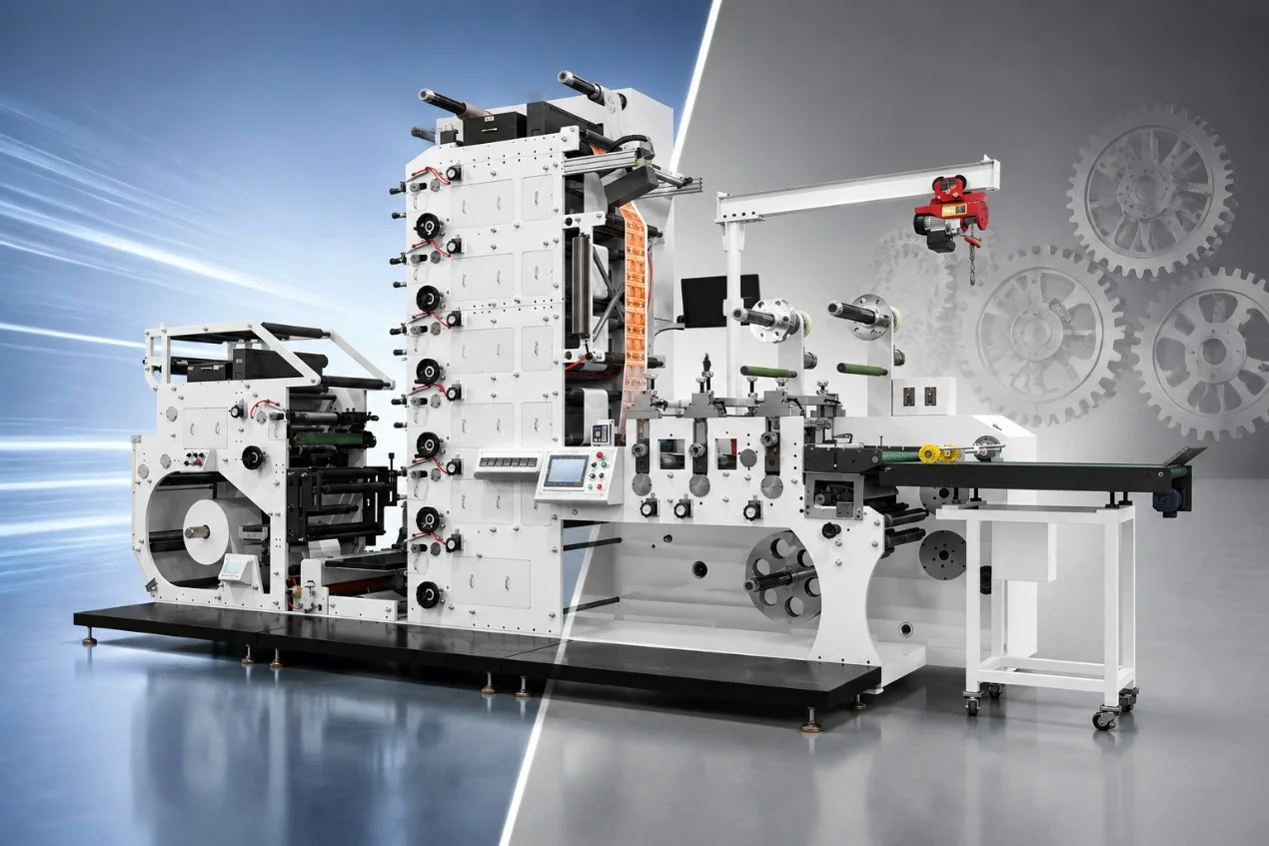
For manufacturers producing high-quality self-adhesive labels, multi-color graphics, and frequently changing designs, a servo-driven modular flexo printing machine is often worth considering. Its flexible control and potential for inline finishing can support efficient narrow-web production.
For applications involving relatively simple printing requirements, stable repeat orders, and tighter investment budgets, a conventional gear-driven machine may still be suitable.
Buyers should also consider the material being printed. Paper labels, PET, BOPP, and other film substrates may have different tension and registration requirements. The machine’s web-handling system, ink compatibility, and drying or curing capacity must match the actual application.
Before making a final decision, ask the supplier to explain the drive configuration, registration system, supported printing repeat range, maintenance requirements, and available technical support. Testing representative materials is one of the most effective ways to evaluate real machine performance.
Final Thoughts
Servo-driven and gear-driven flexo printing machines each have advantages. Servo technology offers greater potential for electronic synchronization, automation, and flexible job changes, while conventional gear-driven systems can remain economical for suitable production applications.
The best investment is not necessarily the most advanced machine, but the one that delivers consistent printing quality, efficient operation, and reasonable long-term costs for your business.
Looking for a flexographic printing machine for label or packaging production? GGIN Machinery provides servo modular and stack flexo printing solutions with different configurations. Share your printing material, web width, number of colors, production speed, and budget, and we can help you evaluate a suitable flexo printing machine for your application.