Roll Telescoping Problems: Causes and Solutions in Rewinding
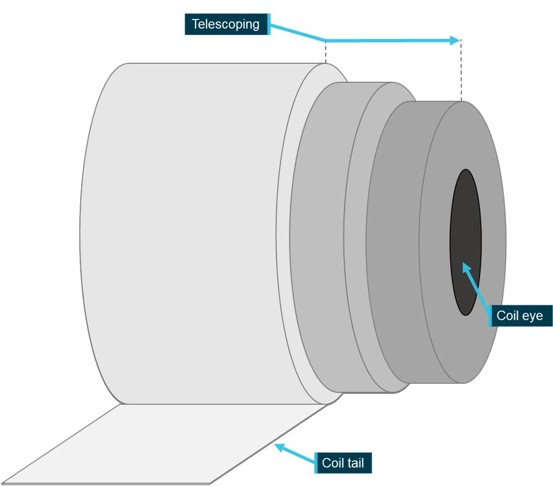
Roll telescoping problems are a common winding defect in slitting and rewinding operations. They occur when layers of material shift sideways, causing the finished roll to lose its flat, uniform edges and develop a telescope-like appearance. This problem can affect paper, plastic films, self-adhesive labels, and other flexible packaging materials.
Telescoping rolls may cause difficulties during transportation, storage, and subsequent converting operations. In severe cases, the displaced layers can become damaged or make the roll unsuitable for further processing.
Understanding the causes of roll telescoping is essential for improving winding quality, reducing material waste, and maintaining consistent production efficiency.
What Is Roll Telescoping?
Roll telescoping occurs when wound layers move laterally relative to one another, resulting in an uneven or stepped roll profile. The movement may appear near one side of the roll or extend through a larger portion of the wound material.
In a properly wound roll, the layers remain aligned and stable throughout handling and storage. When the winding structure lacks sufficient stability, the layers may shift under mechanical forces or changes in handling conditions.
Telescoping is sometimes confused with other winding defects, such as uneven roll edges, dishing, or loose winding. Although these problems can be related, they may have different causes and require different adjustments.
Common Causes of Roll Telescoping Problems
Incorrect Rewinding Tension
Improper rewinding tension is one of the main causes of roll telescoping problems.
If winding tension is too low, the material layers may not develop enough interlayer friction to remain stable. This can allow the layers to move sideways during winding, handling, or transportation.
Excessive tension can also create problems by deforming sensitive materials, increasing internal stresses, or producing an unsuitable winding structure.
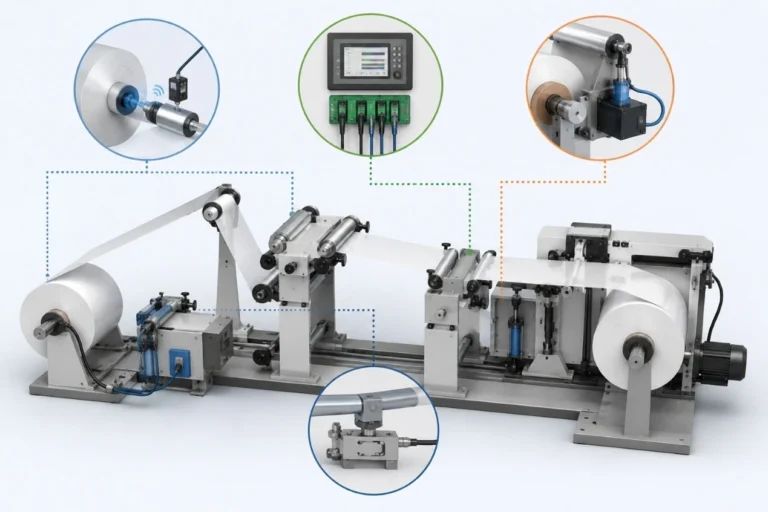
As the finished roll diameter increases, the winding system must maintain an appropriate tension profile. For many materials, controlled taper tension is used to reduce winding tension as roll diameter increases, helping manage internal roll stresses.
However, the correct tension profile depends on the material, roll diameter, thickness, and winding configuration. Simply increasing tension is not always an effective solution.
Poor Web Alignment and Guiding
Unstable web alignment can contribute to uneven winding and telescoping defects.
If the material moves laterally before entering the rewinding section, the layers may not be positioned consistently on the finished roll. Incorrect web guiding settings, misaligned rollers, and unstable material tracking can all affect winding accuracy.
A properly configured web guiding system helps maintain the intended material position. Operators should also inspect the web path and roller alignment to ensure that the material enters the rewinding section smoothly.
Web guiding and winding tension must work together to achieve stable roll formation.
Uneven Winding Hardness
Roll hardness influences the stability of the finished roll.
A roll that is wound too loosely may not have enough structural stability to resist lateral movement. On the other hand, excessive winding tightness can create high internal stresses and lead to material deformation.
Inconsistent winding hardness across the roll diameter can also contribute to instability, particularly during handling or subsequent unwinding.
Depending on the machine design, winding tension, nip pressure, and torque control may all influence the final roll structure.
Operators should evaluate winding hardness according to the material and application rather than assuming that harder rolls are always better.
Material Properties and Surface Friction
Different materials respond differently to winding conditions.
Smooth plastic films, including certain PET and BOPP materials, may have relatively low interlayer friction, making them more susceptible to layer movement under unsuitable winding conditions.
Material thickness variation, surface coatings, trapped air, and inconsistent roll tension can also affect winding stability.
For thin films, excessive tension may cause stretching or deformation, while insufficient tension may result in loose rolls. This makes material-specific tension settings particularly important.
When telescoping occurs only with certain substrates, the material properties should be investigated before making major mechanical adjustments.
Core and Rewinding Shaft Problems
The condition of the winding core and shaft can influence roll stability.
Poorly fitted cores, damaged core surfaces, insufficient shaft gripping force, or incorrect core positioning may allow the roll to move or wind unevenly.
For machines using differential winding systems, incorrect torque distribution or unsuitable slip settings can also contribute to inconsistent winding tension between individual rolls.
Operators should inspect the cores, shafts, and relevant winding components before production, especially when processing multiple narrow rolls.
How to Prevent Roll Telescoping Problems
Preventing telescoping requires coordinated control of winding tension, web alignment, material handling, and machine condition.
The first step is to establish suitable winding tension for the specific material. Operators should consider the material thickness, surface characteristics, finished roll diameter, and required winding hardness.
Where supported by the machine, an appropriate taper tension profile can help maintain a more stable winding structure as the roll grows.
Web guiding systems should be checked regularly to ensure that the material enters the winding section in the correct position. Guide rollers, bearings, and other mechanical components should also be inspected for wear or misalignment.
For machines equipped with lay-on rollers or nip pressure control, these settings should be adjusted according to the winding requirements. Excessive or insufficient pressure can affect roll formation and may contribute to winding defects.
Regular preventive maintenance and accurate recording of successful production settings can help reduce recurring problems.
Troubleshooting Telescoping Rolls During Production
When telescoping occurs, operators should first determine whether the defect develops during rewinding or appears later during handling and transportation.
If the roll begins shifting during production, check the winding tension, web alignment, core stability, and relevant torque settings. Sudden changes in roll hardness or tension may indicate that the winding control system requires adjustment.
If the roll appears acceptable immediately after production but telescopes during transportation, investigate the winding structure, material friction, packaging, and handling conditions.
For problems affecting only certain roll widths or winding positions, inspect individual shaft settings, core quality, and tension distribution.
Adjust one major parameter at a time where practical, and evaluate the results using representative production materials. This makes it easier to identify the actual cause and avoid unnecessary adjustments.
All inspections and adjustments should follow the machine manufacturer’s safety procedures. Operators should never reach into moving winding shafts or rollers.
Choosing the Right Slitter Rewinder for Better Roll Quality
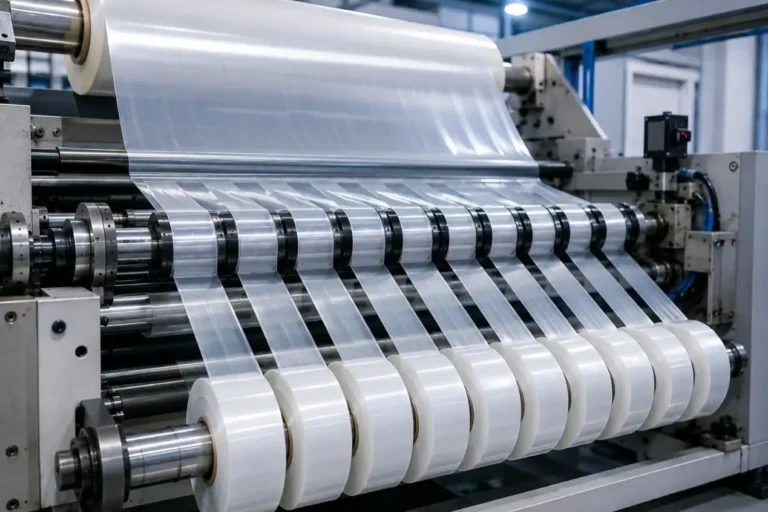
A suitable slitting and rewinding machine should provide stable material handling and appropriate winding control for the intended application.
Important factors include machine tension-control capability, web guiding performance, rewinding shaft configuration, torque control, and finished roll diameter.
For narrow rolls, differential winding systems may be beneficial when individual rolls require compensation for differences in thickness or winding behavior. However, the suitability of a differential system depends on the material and production requirements.
For label and flexible packaging manufacturers, consistent winding quality is often more important than maximum machine speed alone.
Before purchasing a slitter rewinder, buyers should confirm the intended materials, thickness range, minimum slit width, core diameter, and maximum finished roll diameter. Testing representative materials can also help verify whether the proposed machine configuration meets production requirements.
Final Thoughts
Roll telescoping problems can result from incorrect winding tension, poor web alignment, uneven roll hardness, unsuitable material properties, or mechanical issues.
The most effective solution is to identify the actual cause and optimize the complete winding process rather than adjusting tension alone. With proper machine settings, stable web handling, and regular maintenance, manufacturers can reduce telescoping defects and improve finished roll consistency.
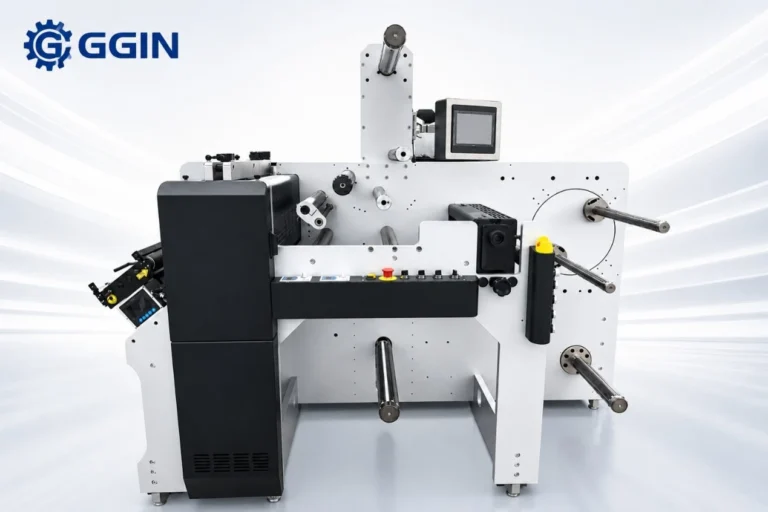
Looking for a reliable slitting and rewinding solution? GGIN Machinery supplies slitter rewinders and related converting equipment for label, paper, and flexible packaging applications. Share your material specifications, web width, slit width, and finished roll requirements, and we can help you evaluate a suitable machine configuration.