Web Guiding Problems in Slitting: Causes and Solutions
Web guiding problems in slitting can lead to uneven slit widths, misaligned roll edges, wrinkles, and increased material waste. For manufacturers processing self-adhesive labels, paper, PET, BOPP, and other flexible materials, accurate web alignment is essential for maintaining consistent slitting quality and stable production.
A web guiding system, also known as an edge position control (EPC) system, helps keep the moving material aligned with a defined reference position. However, even machines equipped with automatic web guiding may experience tracking problems due to incorrect sensor settings, unstable tension, roller misalignment, or mechanical issues.
Understanding the causes of these problems can help operators improve slitting accuracy, reduce downtime, and maintain better finished roll quality.
How Does a Web Guiding System Work?
A web guiding system monitors the lateral position of a moving web and makes corrections when the material moves away from its target position.
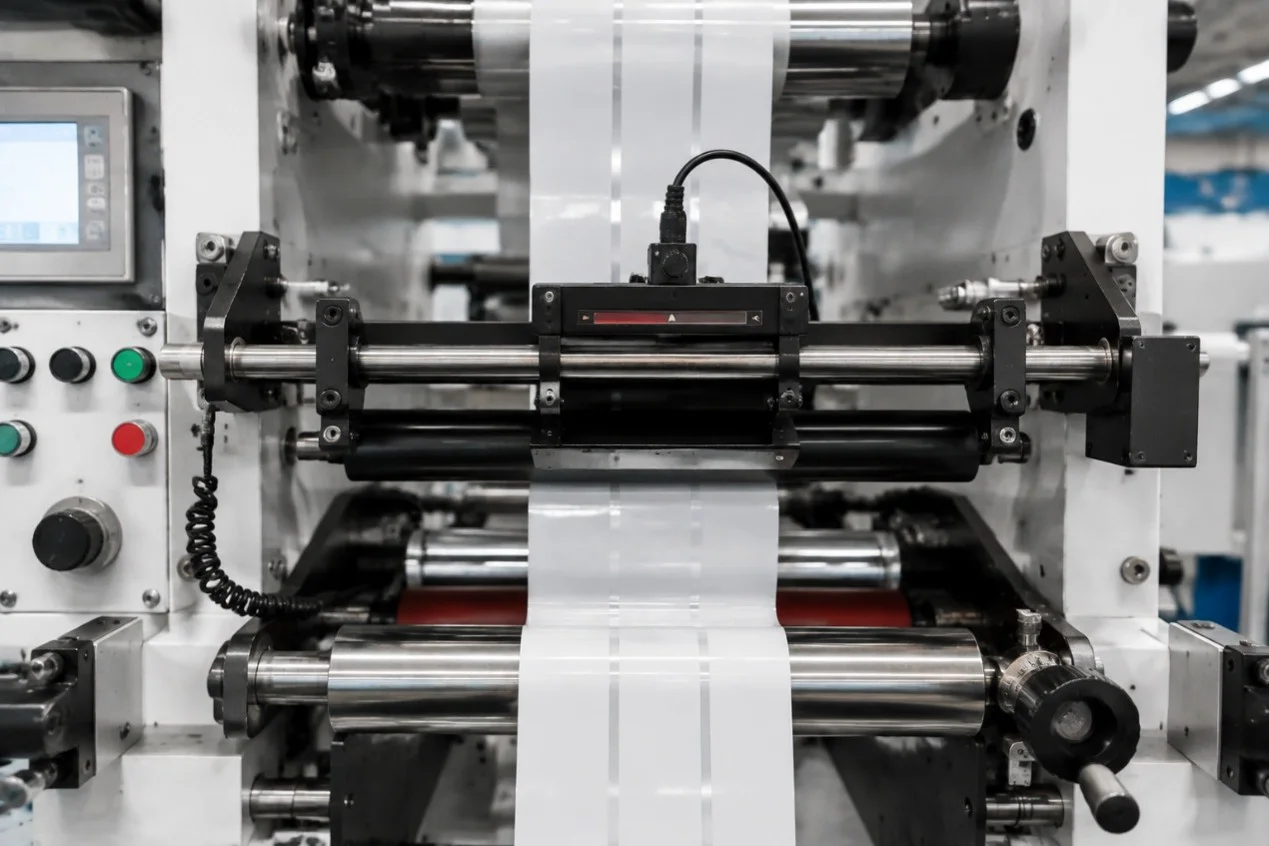
A typical system includes a sensor, controller, and mechanical actuator. The sensor detects the material edge or another reference feature, while the controller calculates the required correction. The actuator then adjusts the position of a guiding mechanism to bring the material back toward the desired path.
Depending on the machine design, web guiding may be installed at the unwinding section or another suitable location along the material path.
Common sensor technologies include ultrasonic, infrared, and optical sensors. Their suitability depends on the material’s transparency, surface characteristics, and the type of reference being detected.
Although automatic web guiding improves alignment control, it cannot compensate for every mechanical or material-related problem.
Common Causes of Web Guiding Problems in Slitting
Incorrect Sensor Position or Calibration
Improper sensor positioning is one of the most common causes of web guiding problems in slitting machines.
If the sensor is not correctly aligned with the material edge, it may provide inaccurate position information to the controller. Incorrect calibration, contamination, or unsuitable sensitivity settings can also cause unstable correction.
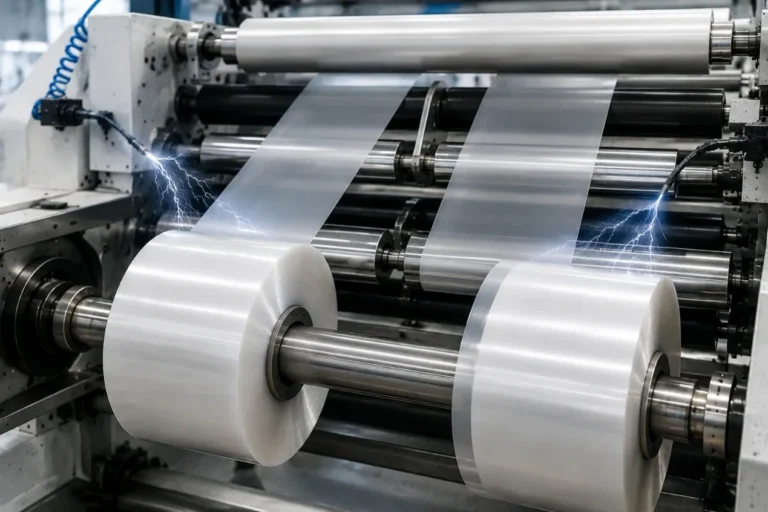
For transparent films, sensor selection is particularly important. Some optical sensors may struggle to distinguish the material edge from the background, while suitable ultrasonic sensors can provide more reliable edge detection for certain transparent substrates.
Operators should confirm that the sensor is compatible with the material and positioned within its specified detection range.
Unstable Web Tension
Web tension and web guiding are closely related. When tension fluctuates, the material may wrinkle, stretch, or move laterally, making accurate tracking more difficult.
Excessive tension can deform sensitive films, while insufficient tension may allow the web to wander between rollers.
If the material moves from side to side during acceleration or deceleration, operators should check the tension-control system before making major changes to the guiding controller.
Stable unwinding tension and proper web handling provide the foundation for effective guiding performance.
Misaligned Rollers and Mechanical Components
Even a properly calibrated guiding system may struggle when rollers are not correctly aligned.
Misaligned guide rollers, damaged bearings, uneven roller surfaces, or incorrect web threading can cause the material to drift continuously toward one side.
If the guiding actuator repeatedly reaches its movement limit, the problem may originate from the mechanical alignment of the machine rather than the sensor.
Operators should inspect roller parallelism, bearing condition, web path, and mounting components according to the machine manufacturer’s procedures.
Incorrect Guiding Controller Settings
Automatic web guiding systems require suitable control settings to respond accurately to lateral movement.
If the controller responds too aggressively, the guiding mechanism may overcorrect, causing the web to oscillate from side to side. If the response is too slow, the system may not correct material movement quickly enough.
Incorrect guiding direction, unsuitable response parameters, or actuator movement limitations can also affect performance.
Controller adjustments should follow the equipment manufacturer’s recommendations. Operators should avoid increasing correction sensitivity without first identifying the source of the tracking problem.
How Web Guiding Problems Affect Slitting Quality
Poor web alignment can affect several aspects of the slitting process.
When the material shifts laterally relative to the slitting knives, the cutting position may vary, resulting in inconsistent slit widths or increased edge-trim waste. The severity depends on the knife arrangement, guiding location, and the relationship between the web and cutting section.
Lateral movement may also contribute to uneven finished roll edges, particularly when combined with unsuitable rewinding tension or unstable material handling.
For printed labels, inaccurate web tracking can create additional difficulties when the slitting position must remain aligned with printed graphics.
However, uneven roll edges do not always indicate a web guiding problem. Rewinding shaft condition, tension distribution, material thickness variation, and core alignment should also be considered.
How to Troubleshoot Web Guiding Problems
Effective troubleshooting begins by observing when and where the material moves away from its intended path.
If the web consistently drifts in one direction, check the roller alignment, web threading, and guiding actuator position. If the material oscillates repeatedly, inspect the sensor signal and controller response settings.
When tracking problems occur mainly at higher speeds, evaluate web tension stability, mechanical vibration, and the guiding system’s response capability.
If problems appear only with certain materials, verify the sensor technology and calibration. Transparent films, printed webs, and materials with irregular edges may require different detection methods or settings.
A useful diagnostic approach is to check the incoming web position, sensor readings, actuator movement, and material alignment near the slitting section. This helps determine whether the guiding system is correcting the problem or reacting to instability elsewhere in the machine.
Inspections and adjustments should be performed according to the manufacturer’s safety procedures. Operators must never reach into moving rollers or bypass protective guards while troubleshooting.
Best Practices for Stable Web Guiding
Maintaining consistent web alignment requires regular inspection and correct machine setup.
Before production, operators should check the sensor surface, guiding mechanism, roller condition, and material threading. The guiding reference should be selected according to the substrate and required cutting position.
During production, web tension should remain within the appropriate range for the material. Sudden changes in speed, tension, or material properties should be monitored because they may affect guiding performance.
Regular cleaning and calibration of sensors can help prevent incorrect detection. Mechanical components should also be inspected for looseness, wear, and restricted movement.
For repeat orders, recording successful tension and guiding settings can reduce setup time and improve production consistency.
Choosing a Slitting Machine with Reliable Web Guiding
When purchasing a slitting machine, buyers should evaluate the web guiding system together with the machine’s tension control, cutting arrangement, and rewinding configuration.
Important considerations include sensor compatibility with the intended materials, guiding accuracy, actuator response, available correction range, and ease of adjustment.
For thin PET or BOPP films, stable tension and suitable edge detection are particularly important. For printed labels, the ability to maintain the required relationship between the printed image and slitting position may also influence the guiding configuration.
Buyers should confirm the actual guiding arrangement and request a demonstration using representative production materials whenever possible.
Final Thoughts
Web guiding problems in slitting can result from incorrect sensor settings, unstable tension, roller misalignment, unsuitable controller parameters, or material characteristics.
A reliable guiding system works best when combined with proper mechanical alignment and stable web handling. By identifying the real cause of lateral movement and maintaining the relevant components, manufacturers can improve slitting accuracy, reduce waste, and achieve more consistent finished roll quality.
Looking for a slitting machine with suitable web guiding and tension control? GGIN Machinery offers slitting and rewinding solutions for label, paper, and film converting applications. Share your material type, thickness, web width, minimum slit width, and finished roll requirements, and we can help you evaluate a suitable machine configuration.