How to Improve Die Cutting Quality in Label Production
Understanding how to improve die cutting quality is essential for label manufacturers looking to reduce waste, maintain accurate cutting, and produce consistent finished labels. Poor die cutting can cause incomplete cuts, damaged release liners, rough label edges, and unstable waste matrix removal, all of which affect production efficiency and product quality.
Whether using rotary, semi-rotary, or flatbed die cutting equipment, achieving reliable results requires the correct combination of cutting tools, pressure settings, web tension, material properties, and machine maintenance. This guide explains the main factors affecting label die cutting quality and how manufacturers can optimize their production processes.
Common Die Cutting Quality Problems
Before improving die cutting performance, operators need to identify the specific defects occurring during production.
Incomplete cutting is a common problem in pressure-sensitive label production. If the cutting tool does not penetrate the face material and adhesive sufficiently, labels may remain connected to the surrounding waste matrix.
Excessive cutting pressure can damage the release liner, creating difficulties during label dispensing or subsequent converting operations. Other common defects include rough cutting edges, inconsistent cutting depth, registration errors, adhesive buildup, and label lifting during waste removal.
These problems may originate from the cutting tool, machine settings, material characteristics, or a combination of several factors. Identifying the actual cause is more effective than adjusting cutting pressure repeatedly without a clear diagnosis.
How to Improve Die Cutting Quality Through Proper Pressure Adjustment
Correct cutting pressure is one of the most important factors in label die cutting.
In kiss-cutting applications, the cutting tool must penetrate the face material and adhesive while leaving the release liner sufficiently intact. Too little pressure can produce incomplete cuts, while excessive pressure may score or damage the liner.
Operators should begin with the machine manufacturer’s recommended settings and make controlled adjustments according to the material structure and cutting tool specifications.
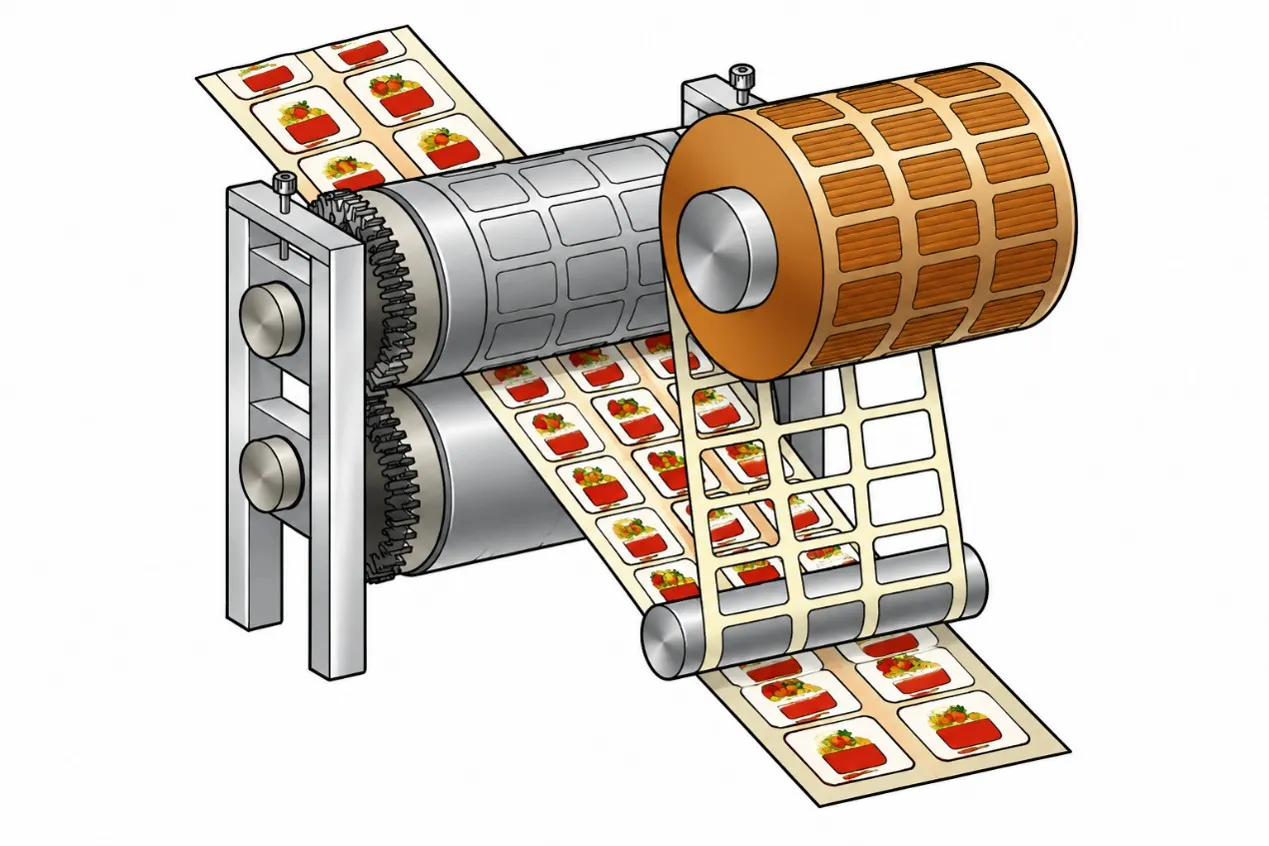
For rotary die cutting systems, cutting performance also depends on the relationship between the cutting cylinder and anvil cylinder. On machines equipped with adjustable clearance or pressure-control mechanisms, these settings should be checked carefully to maintain consistent cutting results.
The objective is to achieve a clean, repeatable cut without unnecessary pressure or excessive tool wear.
Select the Right Die Cutting Tools
The cutting tool must be suitable for the material, label shape, and required production speed.
Flexible dies mounted on magnetic cylinders are widely used in rotary label converting. Solid rotary dies and flatbed cutting tools are also used for applications requiring different cutting characteristics.
Tool selection should consider the total material construction, including face stock, adhesive, and release liner. Paper labels, synthetic films, and laminated materials may require different cutting specifications.
Cutting edge geometry, tool height, manufacturing accuracy, and wear resistance can all influence performance. A die that works well with one material may not deliver the same results with another.
Using the correct tooling helps improve cutting consistency and reduces unnecessary adjustments during production.
Maintain Stable Web Tension and Registration
Web tension control is another important factor affecting die cutting quality.
If the material stretches, wrinkles, or moves inconsistently through the cutting station, the cutting position may shift relative to the printed image. This can result in inaccurate label shapes or inconsistent registration.
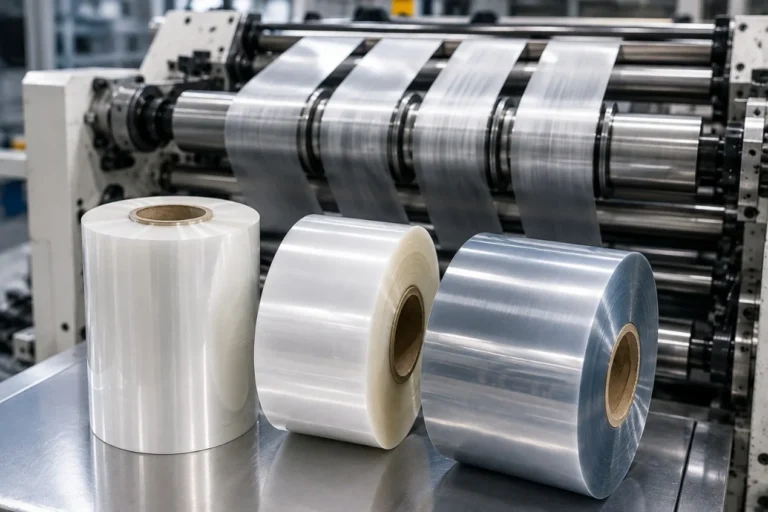
Thin PET, BOPP, and other flexible materials may be particularly sensitive to unsuitable tension settings.
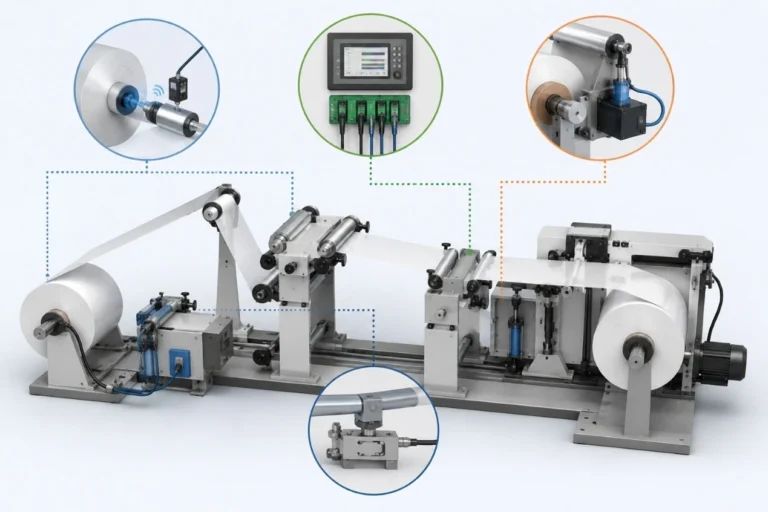
Operators should check the unwinding system, web guiding components, drive synchronization, and material path before adjusting cutting registration.
For printed labels, the die cutting unit must maintain accurate alignment with the printed graphics. Depending on the machine configuration, registration sensors and servo control systems can help maintain cutting accuracy during production.
Stable material handling is essential for achieving repeatable die cutting results.
Prevent Adhesive Buildup and Cutting Tool Wear
Adhesive contamination can gradually reduce cutting quality, particularly when processing pressure-sensitive labels.
Adhesive residue may accumulate on cutting edges or surrounding components, contributing to poor cutting performance, material sticking, and unstable waste removal.
Regular cleaning helps maintain consistent cutting conditions. Operators should use cleaning methods compatible with the cutting tool and follow the tooling manufacturer’s recommendations.
Cutting edges should also be inspected for damage, wear, or contamination. Worn tools may require increasing pressure to maintain cutting performance, but excessive pressure can accelerate wear and create additional problems.
Replacing or professionally servicing damaged tools is often more effective than continuing to compensate through machine adjustments.
Improve Waste Matrix Removal
Clean die cutting does not automatically guarantee successful waste removal.
During label production, the surrounding waste matrix must be separated from the finished labels without lifting or damaging them.
Waste stripping performance depends on label shape, matrix width, adhesive properties, cutting completeness, stripping geometry, and waste rewinding tension.
Small labels, complex shapes, and narrow waste sections can be particularly challenging because the waste matrix may tear during removal.
Operators should confirm that the cutting process is complete before increasing waste stripping tension. Excessive tension may cause matrix breaks or lift finished labels from the liner.
Optimizing the waste removal path and maintaining suitable stripping conditions can improve production stability and reduce downtime.
Match Die Cutting Settings to Different Materials
Different label materials require different die cutting conditions.
Paper labels generally behave differently from thin plastic films, which may stretch or deform under excessive tension. Laminated materials and thicker constructions may require different cutting tools or pressure settings.
Adhesive characteristics also influence cutting performance. Some adhesives may contribute to buildup, stringing, or difficult waste removal, particularly when processing small or complex labels.
Before running a new material at full production speed, operators should perform cutting trials and inspect the finished labels and release liner.
Recording successful settings for different materials can help reduce setup time and improve consistency on repeat orders.
Increase Production Speed Without Sacrificing Cutting Quality
Higher operating speeds can improve productivity, but cutting accuracy and waste removal must remain stable.
As speed increases, web tension fluctuations, mechanical vibration, registration errors, or waste stripping limitations may become more noticeable.
Operators should increase speed gradually while checking cutting completeness, liner condition, registration accuracy, and waste matrix stability.
The machine’s maximum rated speed should not be treated as the ideal operating speed for every label design or substrate.
A stable production speed that produces more acceptable finished labels with fewer stops and less waste is often more valuable than simply operating at the highest possible speed.
Regular Inspection and Preventive Maintenance
Consistent die cutting quality depends on regular equipment inspection.
Cutting cylinders, magnetic cylinders, anvil rollers, bearings, and relevant drive components should be checked according to the machine manufacturer’s maintenance schedule.
Operators should also inspect material guiding components, registration sensors, and waste removal systems to identify potential problems before they affect production.
For pressure-sensitive labels, finished products should be checked for clean cutting edges, intact release liners, accurate registration, and reliable dispensing performance.
Preventive maintenance helps reduce unexpected downtime and supports consistent production quality.
Choosing the Right Label Die Cutting Machine
Selecting suitable equipment is important for maintaining die cutting quality across different jobs.
Rotary die cutting machines are commonly used for continuous production, while semi-rotary systems can provide flexibility for certain short-run label applications and variable repeat lengths. Flatbed die cutting equipment may be suitable for other materials, shapes, and production requirements.
Buyers should consider material thickness, web width, cutting accuracy, label dimensions, production speed, tooling costs, and finishing requirements.
For businesses producing different label designs, machine flexibility and setup efficiency may be just as important as maximum operating speed.
Final Thoughts
Improving die cutting quality requires more than adjusting cutting pressure. Tool selection, web tension, registration control, material characteristics, waste removal, and preventive maintenance all contribute to consistent finished labels.
By identifying the causes of cutting defects and optimizing each stage of the process, label manufacturers can reduce waste, improve production efficiency, and maintain reliable product quality.
Looking for a suitable label die cutting solution? GGIN Machinery supplies rotary, semi-rotary, and other die cutting and finishing equipment for label converting applications. Share your material specifications, label dimensions, production speed, and finishing requirements, and we can help you evaluate a suitable machine configuration.