How to Reduce Print Waste in Flexo Printing: 10 Effective Strategies for Higher Efficiency
Reducing print waste is one of the most effective ways to improve profitability in flexographic printing. Material wasted during press setup, color adjustment, registration, job changes, and unstable production not only increases substrate and ink costs but also reduces overall production capacity. This becomes especially important when printing expensive films, specialty label materials, or short-run jobs where startup waste represents a larger percentage of the total order.
Modern flexographic presses can significantly reduce waste, but equipment alone is not enough. Stable process control, accurate plate mounting, proper tension management, standardized job settings, and preventive maintenance all contribute to more efficient production. Here are ten practical strategies for reducing waste in flexo printing.
1. Improve Plate Mounting Accuracy
Inaccurate plate mounting creates unnecessary waste before production reaches acceptable registration. If plates are mounted at slightly different positions, operators may spend additional time and material correcting color-to-color alignment on the press.
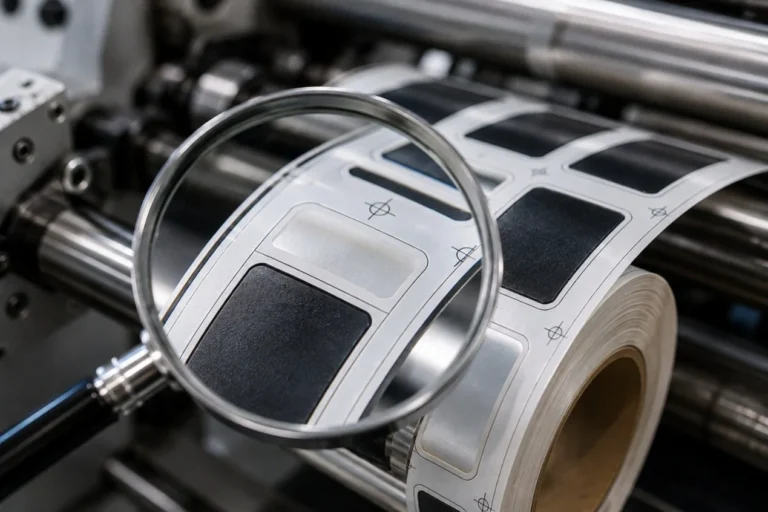
Camera-assisted plate mounting systems can improve mounting accuracy before the printing plates enter the machine. Using consistent mounting procedures, suitable plate mounting tape, and clearly defined registration marks also helps shorten setup time and reduce startup material waste.
2. Optimize Registration Before Full-Speed Production
Registration problems are a major source of flexo printing waste, particularly on multi-color label and flexible packaging jobs. Instead of making repeated adjustments after accelerating the press, operators should establish stable registration during initial setup and increase speed gradually.
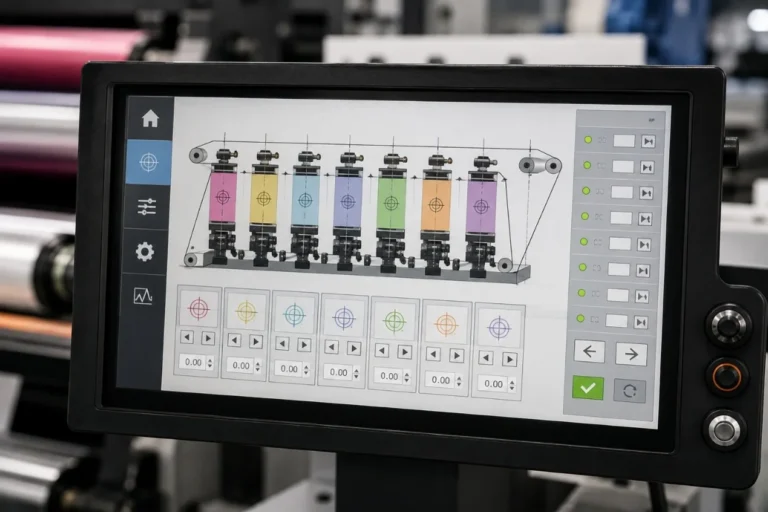
Automatic registration and servo-driven printing systems can reduce the amount of manual correction required during startup and speed changes. For repeat jobs, storing proven registration and machine settings can further shorten preparation time.
3. Maintain Stable Web Tension
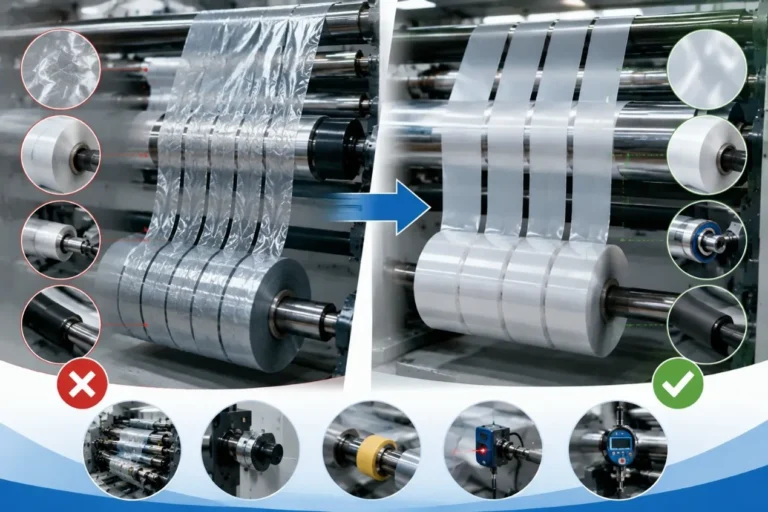
Unstable web tension can cause registration drift, wrinkles, web wandering, stretching, and rewinding problems. These defects may continue for many meters before the operator identifies the problem, resulting in significant material waste.
Tension should be matched to the substrate, thickness, web width, and production speed. Closed-loop tension control helps maintain consistent web movement from unwind through the printing units to rewind, which is particularly important when processing PET, BOPP, PE, shrink films, and other tension-sensitive materials.
4. Control Ink Viscosity and Color Consistency
Frequent color correction creates both ink waste and substrate waste. With water-based and solvent-based flexo inks, changes in viscosity and temperature can affect ink transfer and color density throughout a production run.
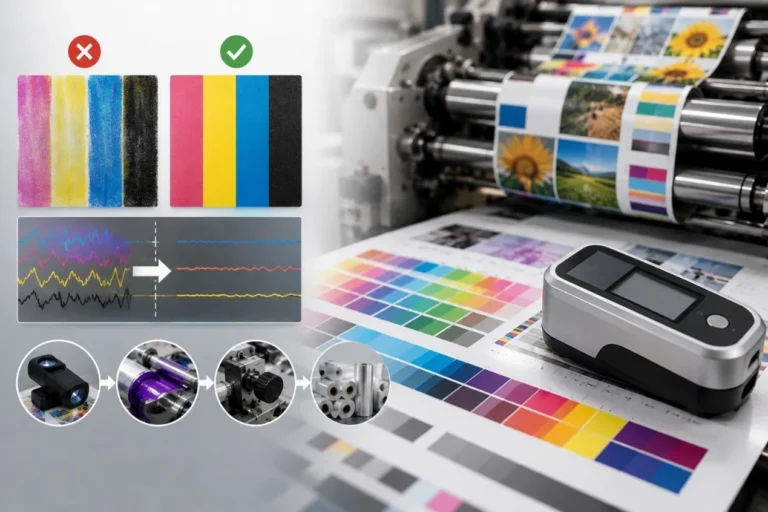
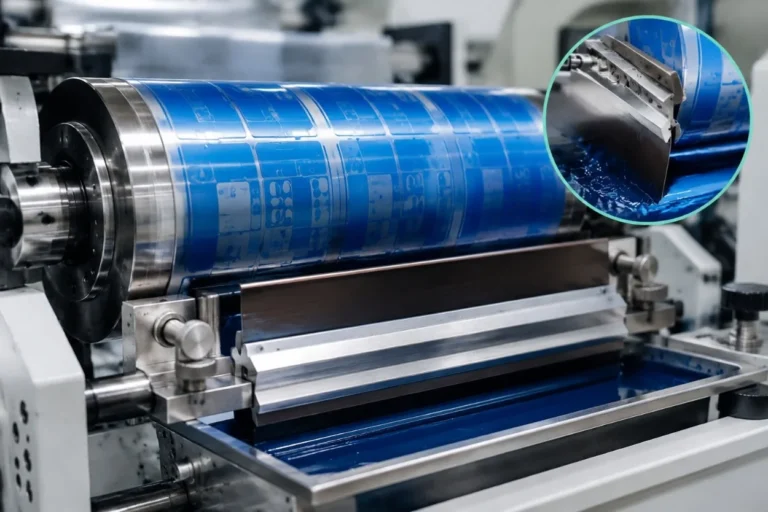
Operators should monitor ink condition according to the ink supplier’s recommendations and record successful parameters for repeat orders. Keeping the ink circulation system, anilox rollers, and doctor blade system in good condition also helps maintain more consistent color without repeated press adjustments.
5. Select the Correct Anilox Roller
Using an unsuitable anilox roller may transfer too much or too little ink, leading to weak colors, excessive ink film thickness, poor drying, dot gain, or inconsistent solid coverage. Trying to compensate for incorrect anilox selection through pressure or ink adjustments can create additional waste.
Anilox line screen and cell volume should be selected according to the required graphics, ink system, substrate, and desired ink density. Regular cleaning is equally important because blocked cells can gradually change ink transfer during production.
6. Use the Minimum Effective Printing Pressure
Excessive impression pressure is a common attempt to solve incomplete ink transfer, but it can create dot gain, dirty print, plate wear, image distortion, and other quality defects.
Correct plate mounting and press setup allow operators to use the minimum pressure necessary for stable ink transfer. Standardizing impression settings can also reduce trial-and-error adjustments when repeat jobs return to the press.
7. Improve Drying and UV Curing Efficiency
Insufficient drying or UV curing may result in ink smearing, blocking, poor adhesion, or ink transfer onto rollers. When this occurs, operators often have to reduce printing speed or discard defective material.
Drying capacity should be matched to ink type, substrate, ink coverage, and production speed. Regular inspection of UV systems, hot-air dryers, airflow, and exhaust systems helps ensure that the printing units are not capable of running faster than the curing process can support.
8. Standardize Job Settings for Repeat Orders
Starting every repeat job from zero wastes time and material. Successful production parameters should therefore be recorded whenever possible, including tension, speed, ink conditions, anilox specifications, printing pressure, drying settings, and other relevant machine parameters.
Digital job storage on modern servo flexographic presses can simplify this process. Although minor adjustments may still be required because of material and environmental changes, a proven starting point can significantly reduce setup waste.
9. Reduce Waste During Job Changes
Short production runs make changeover efficiency increasingly important. Long plate changes, complicated web threading, repeated cleaning, and manual parameter adjustments can make the waste generated between jobs disproportionately high.
Organizing printing plates, inks, substrates, anilox rollers, and job information before the previous order finishes can shorten downtime. Efficient machine design and standardized changeover procedures further reduce the amount of material required to bring the next job into specification.
10. Use Preventive Maintenance Instead of Corrective Maintenance
Worn doctor blades, dirty anilox rollers, damaged bearings, misaligned rollers, aging UV components, and inaccurate sensors may gradually reduce print quality before they cause a complete machine failure. The resulting waste can be much more expensive than routine maintenance.
A preventive maintenance schedule should include inspection of printing cylinders, anilox rollers, doctor blades, tension components, web guides, bearings, drying systems, and registration equipment. Keeping the press in stable mechanical condition allows operators to focus on production rather than continuously compensating for machine problems.
Where Does Flexo Printing Waste Usually Come From?
Flexographic printing waste can generally be divided into startup waste, process waste, and changeover waste. Startup waste occurs while establishing registration, color, tension, and impression settings; process waste develops when conditions become unstable during production; and changeover waste occurs when switching materials, plates, inks, or jobs.
Understanding which category contributes most to total waste is important. A printer experiencing excessive startup waste may need better plate mounting and job-setting procedures, while waste that increases during long runs may indicate problems with ink control, tension, drying, or machine maintenance.
How Servo Flexo Technology Can Help Reduce Waste
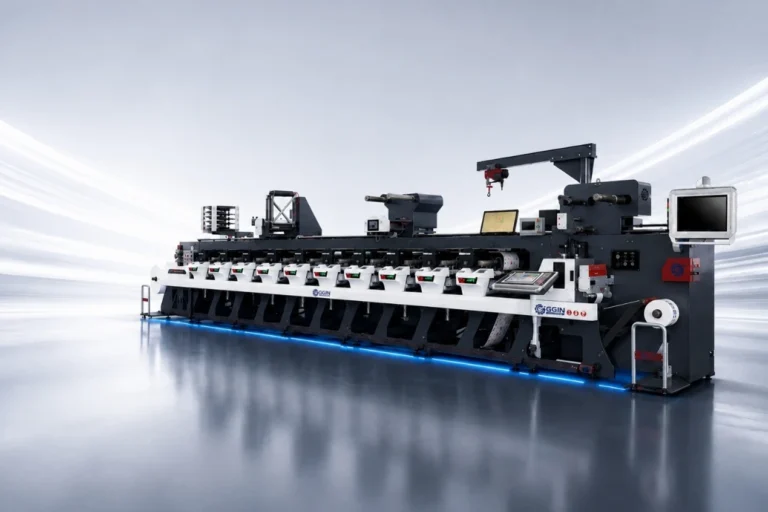
Modern servo-driven flexographic presses can help reduce waste through precise independent drive control, stable web tension, automatic registration, controlled acceleration and deceleration, and digital job management. These features are particularly valuable for short runs and frequent job changes, where reducing setup time and startup material can have a significant impact on production costs.
However, automation should be combined with standardized operating procedures. The best results come from integrating suitable equipment with trained operators, accurate process records, consistent materials, and preventive maintenance.
Conclusion
Reducing print waste in flexo printing does not depend on a single adjustment. It requires better control of plate mounting, registration, web tension, ink, anilox selection, impression pressure, drying, job changes, and machine maintenance.
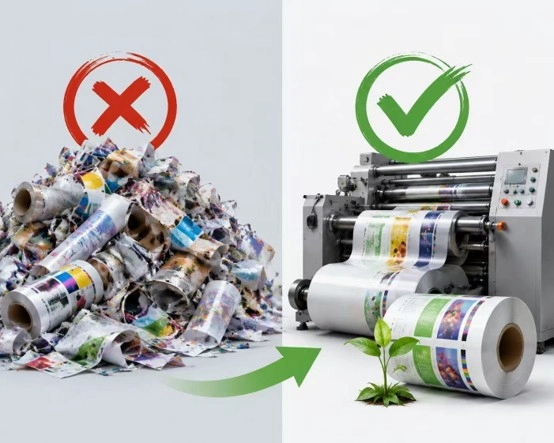
The most effective approach is to identify where waste is generated, measure it consistently, and improve the process step by step. By combining standardized production procedures with modern servo-driven flexographic printing technology, label and flexible packaging manufacturers can reduce material consumption, shorten setup times, improve production efficiency, and achieve more consistent print quality.